Introduction
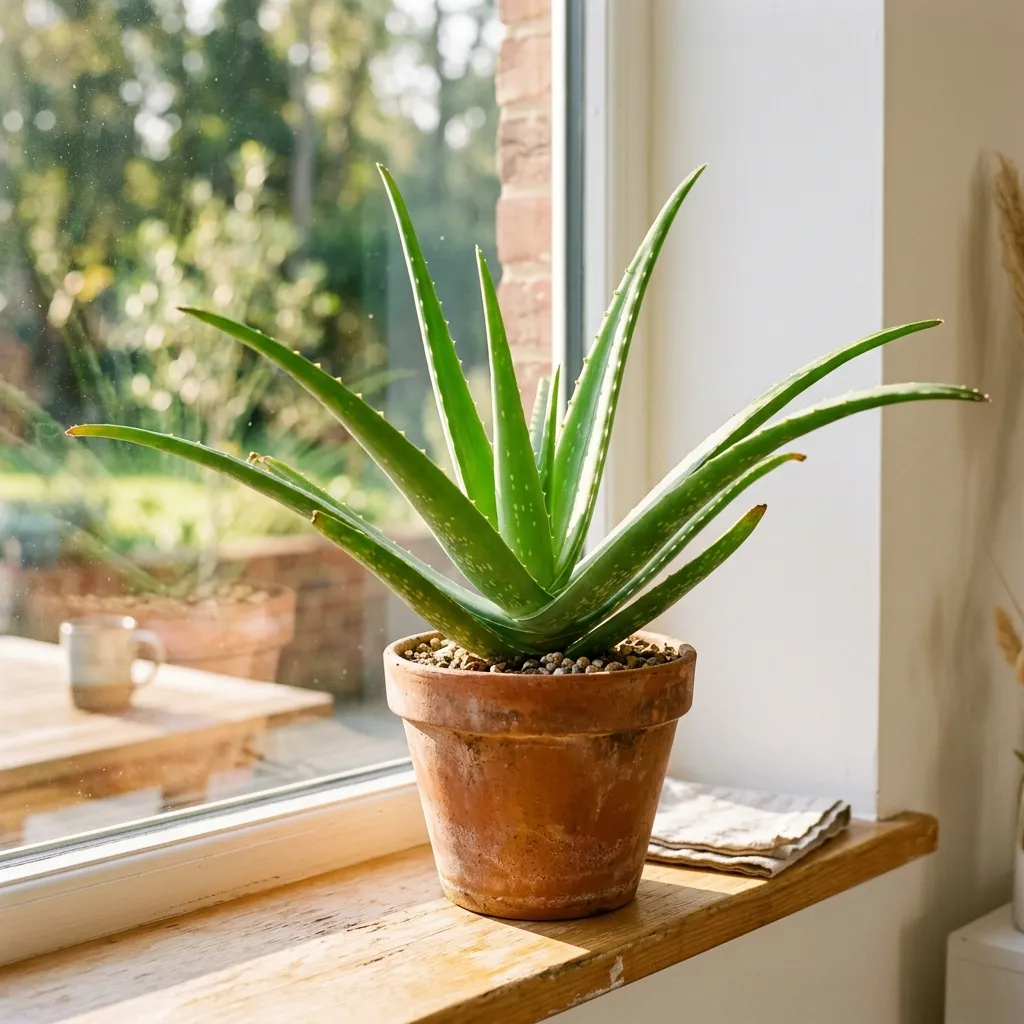
I have a lot of houseplants, but if I had to pick one that earns its spot in my home the most, it would be my aloe vera. This is a plant that doesn’t just sit there looking pretty — it actually does something. Kitchen burn? Snap off a leaf. Sunburn? Aloe gel. Dry skin in winter? Aloe to the rescue. I’ve had my original aloe for over four years now, and it’s produced so many pups that I’ve given away at least a dozen baby plants to friends and family.
Beyond the practical uses, aloe vera is one of the most forgiving houseplants you can grow. It thrives on neglect, handles drought like a champion, and asks for almost nothing in return except a sunny spot and well-draining soil. If you’re a beginner looking for a plant that’s both useful and hard to kill, aloe belongs on your list alongside the other easiest indoor plants for beginners.
In this guide, I’ll cover everything you need to know to keep your aloe vera healthy and thriving — from getting the light and soil just right to harvesting gel and propagating pups.
Light Requirements
Aloe vera is a sun lover. In its native habitat (southern Africa), it grows in bright, open conditions. Indoors, you want to mimic that as closely as possible.
Ideal Light Conditions
- Best: Bright indirect light with some direct morning sun. A south-facing or west-facing window is ideal.
- Acceptable: Bright indirect light all day without direct sun. The plant will grow a bit slower but will stay healthy.
- Not enough: Dim rooms, north-facing windows with no supplemental light, or spots far from any window.
Signs Your Aloe Isn’t Getting Enough Light
The most obvious sign is etiolation — stretching. An aloe that isn’t getting enough light will grow tall and leggy, with thin leaves reaching toward the nearest light source instead of growing compact and upright. The leaves may also lose their deep green color and become pale or washed out.
If you notice stretching, move the plant closer to a window or add a grow light. Even a small clip-on grow light running 8-10 hours a day makes a noticeable difference. You can’t reverse the stretching that’s already happened, but new growth will come in compact once light conditions improve.
Can Aloe Handle Full Direct Sun?
Yes, but introduce it gradually. An aloe that’s been living in indirect light can get sunburned if suddenly placed in full, intense afternoon sun. Acclimate it over 1-2 weeks by increasing exposure gradually. Brown or reddish-brown patches on the leaves indicate sunburn.
Once acclimated, aloe vera handles full sun beautifully and will develop a slightly reddish tint to the leaf edges, which is a normal stress response — not damage.
Watering: Less Is More
If there’s one rule for aloe vera care, it’s this: when in doubt, don’t water. Aloe is a succulent that stores water in its thick, fleshy leaves. It’s built for drought. Overwatering is the number one killer of aloe vera plants, and it’s not close.
How to Water Correctly
- Wait until the soil is completely dry. Not just surface-dry — dry all the way through. Stick your finger 2-3 inches into the soil, or use a moisture meter. If there’s any moisture at all, wait.
- Water thoroughly. When you do water, soak the soil completely until water runs out the drainage holes. This ensures the entire root zone gets moisture.
- Empty the saucer. Never let your aloe sit in standing water. Dump any water that collects in the saucer within 30 minutes.
Watering Frequency
| Season | Frequency | Notes |
|---|---|---|
| Spring/Summer | Every 2-3 weeks | Active growing season, soil dries faster |
| Fall | Every 3-4 weeks | Growth slows, reduce water accordingly |
| Winter | Every 4-6 weeks | Dormant period, very little water needed |
These are rough guidelines — your actual frequency will depend on pot size, soil type, humidity, and light levels. A small pot in a sunny window will dry out much faster than a large pot in a dim corner. For more on getting watering right across your plant collection, check out how often to water houseplants.
Signs of Overwatering vs. Underwatering
| Symptom | Overwatering | Underwatering |
|---|---|---|
| Leaves | Mushy, translucent, brown | Thin, curling inward, wrinkled |
| Leaf color | Brown or yellow from base up | Pale, dried tips |
| Soil | Stays wet, may smell mushy | Bone dry, pulling away from pot edges |
| Roots | Soft, brown, mushy (root rot) | Dry but firm and intact |
| Fix | Let dry completely, repot if rotted | Water thoroughly, recovery is fast |
Underwatering is always easier to fix than overwatering. A thirsty aloe recovers within days of a good drink. An overwatered aloe with root rot may not recover at all.
Soil: Drainage Is Non-Negotiable
Standard potting soil retains way too much moisture for aloe vera. You need a fast-draining mix that doesn’t hold water around the roots.
Best Soil Options
Option 1: Pre-made cactus and succulent mix
This is the easiest route. A commercial cactus mix is formulated for plants that need fast drainage, and it works well for aloe right out of the bag. I’d recommend amending it with a handful of extra perlite for even better drainage.
🌵 Get Miracle-Gro Cactus, Palm & Citrus Soil — Fast-Draining Mix for Aloe 🪴 Get Hoffman Organic Cactus & Succulent Soil — Another Excellent OptionOption 2: DIY mix
If you want to mix your own, here’s the recipe I use:
- 2 parts regular potting soil
- 1 part perlite
- 1 part coarse sand (horticultural sand, not beach sand)
This creates a gritty, fast-draining mix that aloe loves. For more soil mixing ideas, check out my guide on the best soil mix for indoor plants.
Pot Selection
Your pot matters almost as much as your soil. The rules:
- Drainage holes are mandatory. No exceptions. No “drainage layer of rocks at the bottom” — that doesn’t work.
- Terra cotta is ideal. It’s porous, which means it wicks moisture away from the soil and helps prevent overwatering. It also adds weight, which is helpful since top-heavy aloe plants can tip over in lightweight plastic pots.
- Don’t go too big. An oversized pot holds too much soil moisture relative to the root mass. Choose a pot that’s about 1-2 inches wider than the root ball. My guide on how to choose pot size walks through this in detail.
For more on choosing the right container, see best pots for indoor plants.
Temperature and Humidity
Aloe vera is easygoing about temperature and humidity — which is part of what makes it such a great indoor plant.
- Ideal temperature: 60-80°F (15-27°C). Normal room temperature is perfect.
- Cold tolerance: Aloe vera does not handle cold well. Keep it away from drafty windows in winter, and never expose it to temperatures below 50°F (10°C).
- Humidity: Normal household humidity is fine. Aloe actually prefers drier air — unlike many tropical houseplants, it doesn’t need a humidifier, misting, or a pebble tray.
This makes aloe a great choice for offices and other spaces where humidity tends to be on the lower side.
Fertilizing
Aloe vera is a light feeder. In the wild, it grows in nutrient-poor, sandy soil — so it doesn’t need or want heavy fertilization.
- Growing season (April-September): Feed once a month with a balanced liquid fertilizer diluted to half strength. A cactus-specific fertilizer works great, but any balanced all-purpose fertilizer is fine.
- Winter (October-March): Don’t fertilize at all. The plant is dormant and can’t use the nutrients.
Over-fertilizing aloe leads to soft, weak growth that’s prone to flopping over. Less is genuinely more with this plant.
Common Aloe Vera Problems and Solutions
Mushy, Translucent Leaves
Cause: Overwatering and/or root rot. Fix: Stop watering immediately. Remove the plant from its pot and inspect the roots. Trim any brown, mushy roots with clean shears. Let the root ball air-dry for 24-48 hours, then repot in fresh, dry cactus mix. Don’t water for at least a week after repotting.
Stretching and Leaning
Cause: Insufficient light. Fix: Move to a brighter location. Rotate the pot quarterly so the plant grows evenly. Existing stretched growth won’t compact — but new growth will come in properly if light is improved. If you notice leaves yellowing while the plant stretches, it might be a combination of issues — see yellow leaves on houseplants for a full diagnostic.
Brown, Crispy Leaf Tips
Cause: Usually underwatering, sometimes sunburn or low humidity. Fix: Check your watering schedule. If the soil has been bone-dry for extended periods, water thoroughly. If the plant is in intense afternoon sun, move it to a spot with gentler light.
Flat, Drooping Leaves
Cause: Not enough light, or the plant is root-bound and top-heavy. Fix: Improve light conditions. If the plant is large and top-heavy, repot it into a heavier terra cotta pot with fresh soil.
Brown or Black Spots on Leaves
Cause: Cold damage, sunburn, or fungal issues from excess moisture. Fix: Identify the source — if it’s near a cold window in winter, move it. If it’s been getting sudden direct sun, acclimate gradually. Remove severely damaged leaves at the base.
How to Harvest Aloe Vera Gel
This is the fun part — and one of the main reasons I love growing aloe. Here’s my method:
Step 1: Choose the Right Leaf
Select a thick, plump leaf from the outer ring of the plant (the oldest, most mature leaves). Avoid thin or young inner leaves — they haven’t developed enough gel. Only harvest from a healthy, well-established plant that has plenty of leaves to spare.
Step 2: Cut the Leaf
Use a clean, sharp knife to cut the leaf as close to the base (where it meets the stem) as possible. A clean cut heals better than a ragged tear.
Step 3: Drain the Latex
Stand the cut leaf upright in a glass or bowl for 10-15 minutes. A yellowish liquid (aloin/latex) will drain from the cut end. You want to discard this — it can be irritating to skin and has a bitter taste.
Step 4: Fillet the Gel
Lay the leaf flat on a cutting board. Slice off the serrated edges on both sides, then carefully slide your knife between the green outer skin and the clear gel to separate them. You can fillet from the flat side for the largest gel pieces.
Step 5: Use or Store
- Immediate use: Apply the gel directly to minor burns, sunburns, dry skin, or insect bites.
- Refrigerated storage: Store gel in an airtight container in the fridge for up to one week.
- Frozen: Freeze gel in ice cube trays for longer storage (several months). Pop out a cube whenever you need it.
One important note: I’m talking about topical use here. If you’re interested in consuming aloe, do your own research and consult a professional — not all aloe preparations are safe to eat, and the latex component can be a strong laxative.
Propagation: Growing New Aloe from Pups
Aloe vera doesn’t propagate from leaf cuttings like some succulents. Instead, it produces pups — small offset plants that grow from the base of the mother plant. Once your aloe is happy and established (usually after 2-3 years), it will start producing pups regularly.
How to Separate and Plant Pups
- Wait for the right size. Let pups grow to at least 3-4 inches tall with several leaves and, ideally, their own small root system.
- Unpot the mother plant. Gently remove the entire root ball from the pot.
- Locate the connection. Pups are attached to the mother plant’s root system by a small underground stem. Find where they connect.
- Separate carefully. Use a clean knife to cut the pup away from the mother, making sure the pup retains some roots. If the pup already has roots that separate easily, you may not even need a knife.
- Let the cut dry. Set the pup on a clean surface for 24 hours to let the cut end callous over. This prevents rot when you plant it.
- Plant in cactus mix. Place the pup in a small pot (3-4 inches) with well-draining cactus soil. Don’t water for 3-5 days to let any cut surfaces heal.
- Water sparingly at first. For the first 2-3 weeks, water lightly and infrequently. The pup needs to establish roots in its new home.
I propagated four pups from my original aloe last spring, and all four are now thriving. It’s honestly one of the most reliable propagation methods in the houseplant world.
Aloe Vera Quick-Reference Care Card
| Care Factor | Requirement |
|---|---|
| Light | Bright indirect to direct; south or west window ideal |
| Water | Every 2-3 weeks (summer), 4-6 weeks (winter); let dry completely |
| Soil | Well-draining cactus/succulent mix |
| Pot | Terra cotta with drainage holes; 1-2 inches wider than roots |
| Temperature | 60-80°F; avoid below 50°F |
| Humidity | Normal household humidity; prefers drier air |
| Fertilizer | Monthly at half strength during growing season; none in winter |
| Toxicity | Mildly toxic to cats and dogs |
| Propagation | Pup division (not leaf cuttings) |
| Growth rate | Moderate; matures in 2-3 years |
FAQs
Q: How often should I water aloe vera? A: Water your aloe vera every 2-3 weeks during the growing season, allowing the soil to dry out completely between waterings. In winter, reduce to once a month or less. Aloe stores water in its leaves, so it’s far more tolerant of underwatering than overwatering. When in doubt, wait a few more days.
Q: Why are my aloe vera leaves turning mushy and brown? A: Mushy, translucent, or brown leaves almost always indicate overwatering. Aloe vera roots rot quickly in soggy soil, and the damage shows in the leaves. Remove any affected leaves, let the soil dry completely, and check that your pot has drainage holes. You may need to repot into dry, well-draining soil and trim any rotted roots.
Q: Can aloe vera grow in low light? A: Aloe vera can survive in low light but won’t thrive. It needs bright indirect light or some direct sunlight (especially morning sun) for compact, healthy growth. In low light, aloe becomes leggy and stretched out as it reaches toward the nearest light source. If your space is dim, consider a grow light.
Q: How do I propagate aloe vera? A: The easiest way to propagate aloe vera is by separating pups — small offsets that grow at the base of the mother plant. Wait until the pup is at least 3-4 inches tall with its own root system, then carefully remove it during repotting. Let the pup’s base dry for 24 hours before planting in well-draining cactus soil.
Q: Is aloe vera safe for cats and dogs? A: No, aloe vera is mildly toxic to cats and dogs. The saponins and anthraquinones in aloe can cause vomiting, diarrhea, and lethargy if ingested. Keep aloe plants out of reach of curious pets, or choose pet-safe alternatives like Spider Plants or Haworthia, which has a similar look.
Q: How do I harvest aloe vera gel? A: Select a thick, mature outer leaf and cut it close to the base with a clean knife. Stand it upright for 10-15 minutes to let the yellow latex (aloin) drain out. Then lay the leaf flat, slice off the serrated edges, and fillet the clear gel away from the green skin. The gel can be applied directly to skin or stored in the refrigerator for up to a week.
Happy growing! 🌿