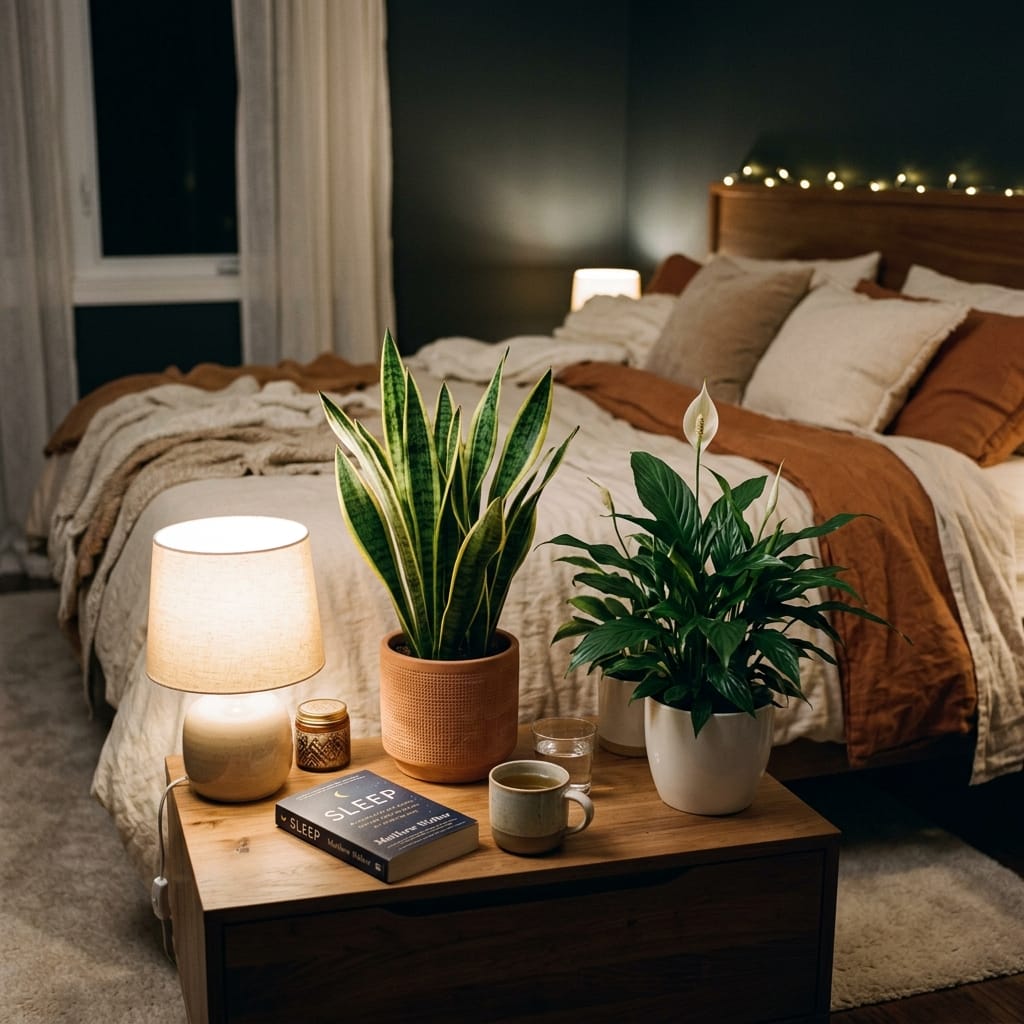
There’s something deeply calming about falling asleep surrounded by living green plants. Beyond the aesthetics, bedroom plants can subtly improve humidity, filter air pollutants, and create a more peaceful sleep environment.
I’ve kept plants in my bedroom for years and I’m convinced they’ve made a difference — maybe not in some NASA-laboratory-quantifiable way, but in the way the room feels when I walk in at night. Calmer. Fresher. More alive.
Here are the 8 best plants for bedrooms, chosen for their low-maintenance requirements, air-purifying qualities, and ability to thrive in typical bedroom light conditions.
The Best Bedroom Plants
1. Snake Plant (Sansevieria)
The single best bedroom plant, period. Here’s why:
- Converts CO₂ to oxygen at night (most plants only do this during the day)
- Thrives in low light
- Nearly impossible to kill
- Needs watering only every 2-3 weeks
- Architectural, modern look
A snake plant on your nightstand is the ultimate low-effort bedroom upgrade.
🐍 Get a Snake Plant on Amazon2. Peace Lily
Peace lilies were highlighted in NASA’s Clean Air Study for removing formaldehyde, benzene, and trichloroethylene — common indoor pollutants from furniture and cleaning products.
- Blooms in low light
- Increases room humidity through transpiration
- Visually elegant on a dresser or nightstand
- Note: Mildly toxic to pets
3. Pothos
Pothos is the ultimate “set it and forget it” bedroom plant. Train it to trail from a high shelf or along a curtain rod for a cozy, jungle-like feel.
- Filters formaldehyde from the air
- Grows in almost any light
- Beautiful trailing habit
- Water every 1-2 weeks
4. Spider Plant
Spider plants are among the most effective air purifiers and are completely pet-safe. They look stunning in a hanging planter near a bedroom window.
- Removes formaldehyde and xylene
- Non-toxic to pets ✅
- Produces babies you can propagate
- Adapts to various light levels
5. Lavender
Yes, you can grow lavender indoors — and the scent genuinely promotes relaxation and better sleep. Studies have shown that lavender fragrance can lower heart rate and blood pressure.
- Light: Needs bright direct light (south-facing window)
- Water: Let soil dry completely between waterings
- Best for: Sunny bedrooms where you want natural fragrance
- Tip: Not ideal for dark bedrooms — it needs serious light
6. Aloe Vera
Aloe is another plant that releases oxygen at night and requires minimal care. Plus, the gel from its leaves is useful for minor burns and skin irritation.
- Night-time oxygen producer (like snake plants)
- Needs bright indirect to direct light
- Water every 2-3 weeks
- Compact — perfect for windowsills
7. Boston Fern
If your bedroom gets decent light and you want maximum air-purifying power, Boston ferns are champions. They also act as natural humidifiers, releasing moisture through their fronds.
- Top-tier air purifier
- Natural humidifier
- Non-toxic to pets ✅
- Needs: Medium-bright indirect light and consistent moisture
Pair with a humidifier during dry winter months.
8. ZZ Plant
The ZZ plant is perfect for bedrooms you don’t spend much daytime in. It handles near-darkness, needs water only every few weeks, and has gorgeous glossy leaves.
- Extremely low-light tolerant
- Drought-tolerant — water every 2-4 weeks
- Modern, sculptural look
- Practically indestructible
Bedroom Plant Care Tips
Light Considerations
Most bedrooms don’t get as much light as living rooms. Here’s a quick guide:
| Bedroom Light | Best Plants |
|---|---|
| Bright (south/west window) | Any plant on this list, including lavender and aloe |
| Medium (east window) | Snake plant, peace lily, pothos, spider plant, ZZ |
| Low (north window, small window) | Snake plant, ZZ plant, pothos |
If your bedroom is truly dark, consider adding a small grow light on a timer.
Watering Schedule
Most bedroom plants need water every 1-3 weeks. Since bedrooms tend to be cooler and less trafficked, soil often stays moist longer. Always check before watering — overwatering in a bedroom’s cooler environment is a common mistake.
Pest Prevention
Bedroom plants can attract fungus gnats if overwatered. Avoid this by:
- Letting soil dry between waterings
- Using well-draining pots
- Keeping yellow sticky traps in pots as an early warning
Placement Ideas
- Nightstand: Snake plant, small peace lily, aloe vera
- Dresser: ZZ plant, pothos in a decorative pot
- High shelf: Trailing pothos
- Window sill: Lavender, aloe, small succulents
- Hanging: Spider plant, Boston fern
- Floor (large): Fiddle leaf fig, large snake plant
Pet Safety Note
If you have cats or dogs that sleep in your bedroom, choose carefully:
| ✅ Pet-Safe | ❌ Toxic to Pets |
|---|---|
| Spider plant | Snake plant |
| Boston fern | Peace lily |
| Parlor palm | Pothos |
| Calathea | Aloe vera |
See our full pet-safe plants guide for more options.
The Sleep Science
While the air-purifying effects of a few houseplants are modest in real-world conditions, the psychological benefits are well-documented:
- Biophilia effect: Being near living plants reduces cortisol (stress hormone)
- Visual calm: Green hues are associated with relaxation
- Humidity: Plants increase ambient humidity by 5-10%, which can reduce dry skin and respiratory irritation
- Routine: Caring for plants creates a mindful ritual that can help with bedtime wind-down
Final Thoughts
Adding plants to your bedroom is one of the simplest, most affordable upgrades you can make. Start with just one — a snake plant on your nightstand is the easiest entry point — and see how it changes the feeling of the room. You’ll probably end up wanting more.
For more room-specific guides, check out plants for bathrooms and plants for offices.