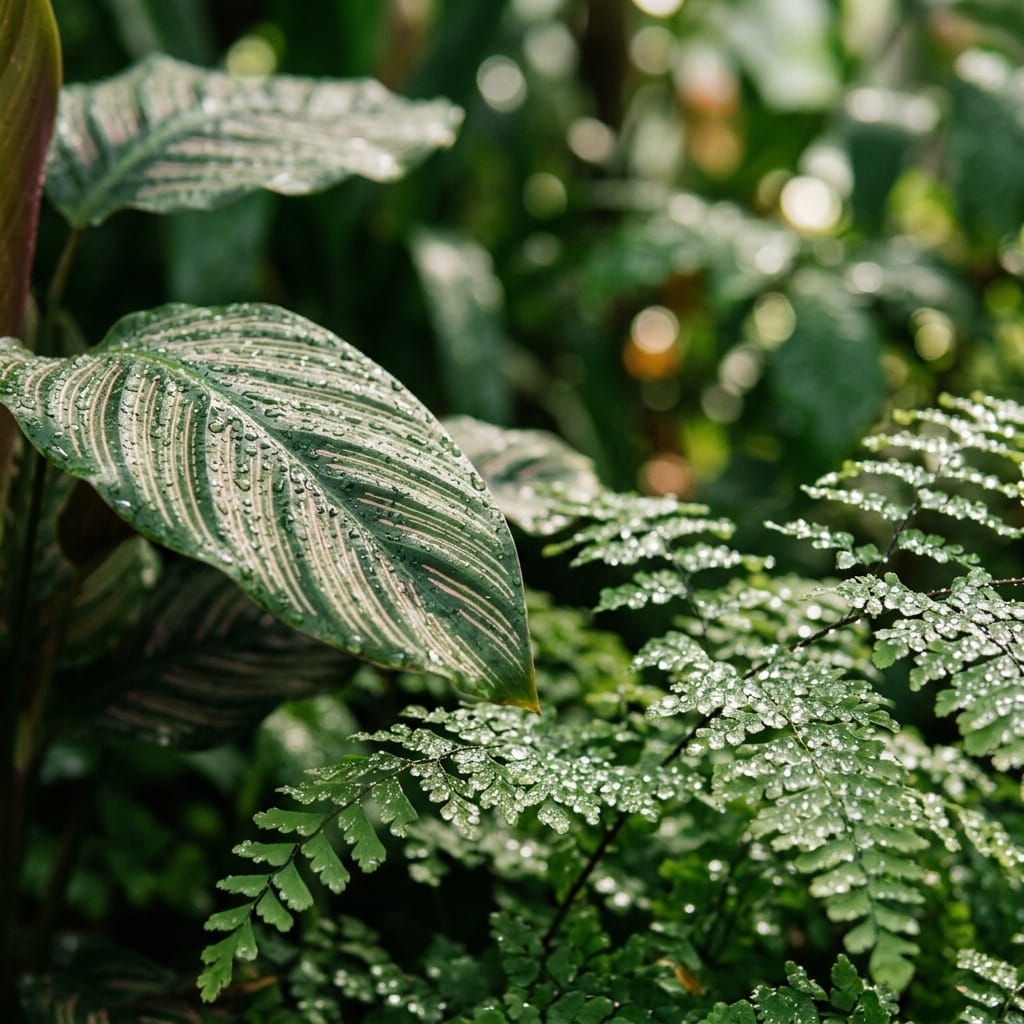
Here’s a question I see constantly in plant groups: “My calathea has brown tips — should I water it more?” And almost every time, the answer isn’t more water — it’s more humidity. But then the follow-up is always: “Do plants really need humidity, or is that just something plant influencers say to sell humidifiers?”
Fair question. Let’s look at the actual science.
How Plants Use Humidity: The 2-Minute Science
Without getting too textbook-y, here’s what’s actually happening inside your plant:
Transpiration
Plants absorb water through their roots and release it as vapor through tiny pores on their leaves called stomata. This process — called transpiration — is essentially how plants “breathe.” It pulls water and nutrients up from the roots, cools the plant, and releases oxygen.
The Humidity Connection
Here’s the key: the rate of transpiration depends on the humidity of the surrounding air. When the air is dry, water evaporates from the leaf surface much faster. The plant loses moisture quicker than its roots can replace it.
Think of it like this: standing outside on a dry, windy day versus a muggy, still day. Your skin dries out much faster in dry air. Your plant’s leaves work the same way.
Vapor Pressure Deficit (VPD)
Plant scientists use a concept called vapor pressure deficit — basically, the difference between how much moisture the air could hold and how much it actually holds. When VPD is high (dry air), plants lose water rapidly. When it’s low (humid air), plants retain more moisture.
You don’t need to calculate VPD. Just know this: the drier your air, the harder your plant works to stay hydrated, even if the soil is wet.
The Humidity Chart: What Level Does Your Plant Need?
Not all plants have the same needs. Here’s a practical breakdown:
🟢 Low Humidity Plants (30-40% — Normal Home Air)
These plants are perfectly happy in typical indoor conditions. Don’t waste a humidifier on them.
| Plant | Ideal Humidity | Notes |
|---|---|---|
| Snake Plant | 30-40% | Prefers dry air; excess humidity can cause rot |
| ZZ Plant | 30-40% | Built to handle dry conditions |
| Succulents & Cacti | 20-40% | Too much humidity causes rot |
| Pothos | 30-50% | Tolerates almost anything |
| Dracaena | 30-50% | Adaptable; not fussy |
| Spider Plant | 30-50% | Very tolerant |
| Rubber Plant | 30-50% | Prefers drier side |
For detailed care on these tough plants, check out our snake plant care guide or ZZ plant care guide.
🟡 Medium Humidity Plants (40-60% — Slight Boost Helpful)
These do fine in most homes but will look noticeably better with a slight humidity increase, especially in winter.
| Plant | Ideal Humidity | Notes |
|---|---|---|
| Monstera | 40-60% | More fenestrations in humid conditions |
| Philodendron | 40-60% | Faster growth with higher humidity |
| Peace Lily | 40-60% | Flowers more readily with humidity |
| Anthurium | 50-60% | Better flowering with moderate humidity |
| Hoya | 40-60% | Higher humidity encourages blooming |
| Chinese Evergreen | 40-60% | Tolerant but appreciates a boost |
| Dieffenbachia | 40-60% | Larger leaves with more humidity |
🔴 High Humidity Plants (60-80% — Definitely Need Help)
These are the plants that will struggle in a typical home without supplemental humidity. If you’re growing any of these, a humidifier is nearly essential.
| Plant | Ideal Humidity | Notes |
|---|---|---|
| Calathea / Maranta | 60-80% | The crispy-tip queens — they NEED humidity |
| Boston Fern | 60-80% | Drops leaves dramatically in dry air |
| Maidenhair Fern | 70-90% | Extremely humidity-demanding |
| Alocasia | 60-80% | Loves moisture in the air |
| Orchid (most types) | 50-70% | Depends on variety |
| Fittonia (Nerve Plant) | 60-80% | Will faint dramatically in dry air |
| Rex Begonia | 50-70% | Needs humidity but hates wet leaves |
| Air Plants (Tillandsia) | 50-70% | Absorb moisture directly from air |
5 Signs Your Plant Needs More Humidity
Not sure if humidity is the issue? Look for these telltale signs:
1. Brown, Crispy Leaf Tips and Edges
This is the #1 sign. If the tips of your leaves are turning brown and papery — but the rest of the leaf looks fine — it’s almost certainly a humidity issue, not a watering one. I see this constantly on calatheas and ferns in heated homes.
2. Leaves Curling Inward
Plants curl their leaves to reduce the surface area exposed to dry air. It’s a survival mechanism — they’re trying to slow down water loss. Calatheas and prayer plants do this very visibly.
3. Slow or Stunted Growth
When a plant is spending all its energy dealing with water stress, it has less energy for growth. If your plant has stalled despite proper light and watering, humidity could be the missing piece.
4. Spider Mite Infestations
Spider mites thrive in dry air. If you keep getting spider mites, your humidity is probably too low. Raising humidity is both a treatment and a prevention strategy. Learn more in our indoor plant pest guide.
5. Drooping Despite Wet Soil
This is the confusing one. If your plant is drooping but the soil is moist, people often overwater even more — making things worse. The drooping may be from humidity stress, not water stress. Check the air, not just the soil.
How to Increase Humidity: 5 Methods Ranked
From most effective to least:
1. Humidifier (Most Effective)
A humidifier raises room humidity consistently for hours. It’s the only method that can reliably maintain 50-60% humidity in a heated home during winter. If you’re serious about tropical plants, this is the move.
👉 See our best humidifiers for indoor plants review for specific recommendations.
2. Grouping Plants Together
Plants release moisture through transpiration. Grouping 5-10 plants together creates a natural humid microclimate — I’ve measured 5-15% higher humidity in my plant corner compared to across the room. Free and effective.
3. Pebble Trays
A shallow tray filled with pebbles and water placed under your plant pot. As the water evaporates, it creates localized humidity. Works well for individual plants but won’t change room humidity.
👉 Learn how to set one up in our pebble tray guide, or read our pebble tray vs. humidifier comparison.
4. Bathroom/Kitchen Placement
These rooms naturally have higher humidity from showers and cooking. If your bathroom gets any natural light, it’s the perfect spot for ferns and calatheas. See our full guide to the best indoor plants for bathrooms.
5. Misting (Least Effective)
I’m going to be honest: misting is mostly theater. It raises humidity for about 15 minutes and then evaporates. It can actually promote fungal issues if water sits on leaves overnight. Misting is great for cleaning leaves, but don’t rely on it for humidity.
For a full comparison, check out our humidifier vs. mister guide.
How to Measure Your Home’s Humidity
You can’t fix what you can’t measure. A hygrometer (digital humidity meter) costs under $10 and takes the guesswork out of everything.
📊 Get a Hygrometer on AmazonQuick tips for measuring:
- Check humidity at plant level, not across the room
- Measure in winter vs. summer — the difference will surprise you
- Readings below 30% mean your tropical plants are definitely struggling
- Readings above 60% mean you can ease off the humidifier
Seasonal Humidity Changes
Something most guides don’t mention: your humidity strategy should change with the seasons.
| Season | Typical Indoor Humidity | Action |
|---|---|---|
| Winter | 20-35% (heating dries air) | Humidifier essential for tropicals |
| Spring | 35-50% (rising naturally) | Humidifier on lower settings |
| Summer | 40-60% (naturally higher) | Often fine without humidifier |
| Fall | 35-45% (dropping) | Start using humidifier again |
I typically run my humidifier from November through March and barely touch it in summer. Your mileage will vary depending on your climate — desert regions may need year-round supplementation. For a complete checklist on keeping your plants alive through the cold months, see our winter houseplant care guide.
Plants That DON’T Want Humidity
It’s worth emphasizing: not every plant benefits from extra humidity. These actually prefer it drier:
- Snake plants — read our care guide
- ZZ plants — read our care guide
- Succulents and cacti — excess moisture causes rot
- Lavender — Mediterranean plant, likes it dry
- Aloe vera — desert native, low humidity preferred
If your collection is mostly low-humidity plants, save your money on the humidifier and invest in good soil and pots instead.
FAQs
Do all houseplants need humidity? No. Many popular houseplants like snake plants, ZZ plants, succulents, and cacti actually prefer drier air (30-40% humidity). It’s mainly tropical plants like calatheas, ferns, and monsteras that benefit from higher humidity (50-70%).
What is the ideal humidity for houseplants? Most tropical houseplants thrive at 40-60% relative humidity. The average home sits around 30-40% in winter and 40-50% in summer, so winter is when you’ll most likely need supplemental humidity.
How can I tell if my plant needs more humidity? Look for brown, crispy leaf tips and edges; leaves curling inward; slow or stunted growth; spider mite infestations (they love dry air); and drooping despite adequate watering.
Does misting actually increase humidity? Barely. Misting raises the humidity around a plant for about 15 minutes before the water evaporates. It’s more useful for cleaning leaves than providing meaningful humidity. A humidifier is far more effective.
Can too much humidity hurt my plants? Yes. Humidity above 70-80% can promote fungal infections, root rot, and mold growth on leaves and soil. Always ensure good air circulation when supplementing humidity.
Do plants increase the humidity in a room? Yes! Through transpiration, plants release moisture through their leaves. Grouping several plants together creates a natural humid microclimate. Larger plants with more leaf surface area release more moisture.
Is low humidity the same as underwatering? No — they’re different problems. Low humidity affects the air around the leaves (causing crispy tips), while underwatering affects the roots and soil (causing wilting and dry soil). A plant can be properly watered but still suffer from low humidity.
Happy growing! 🌿