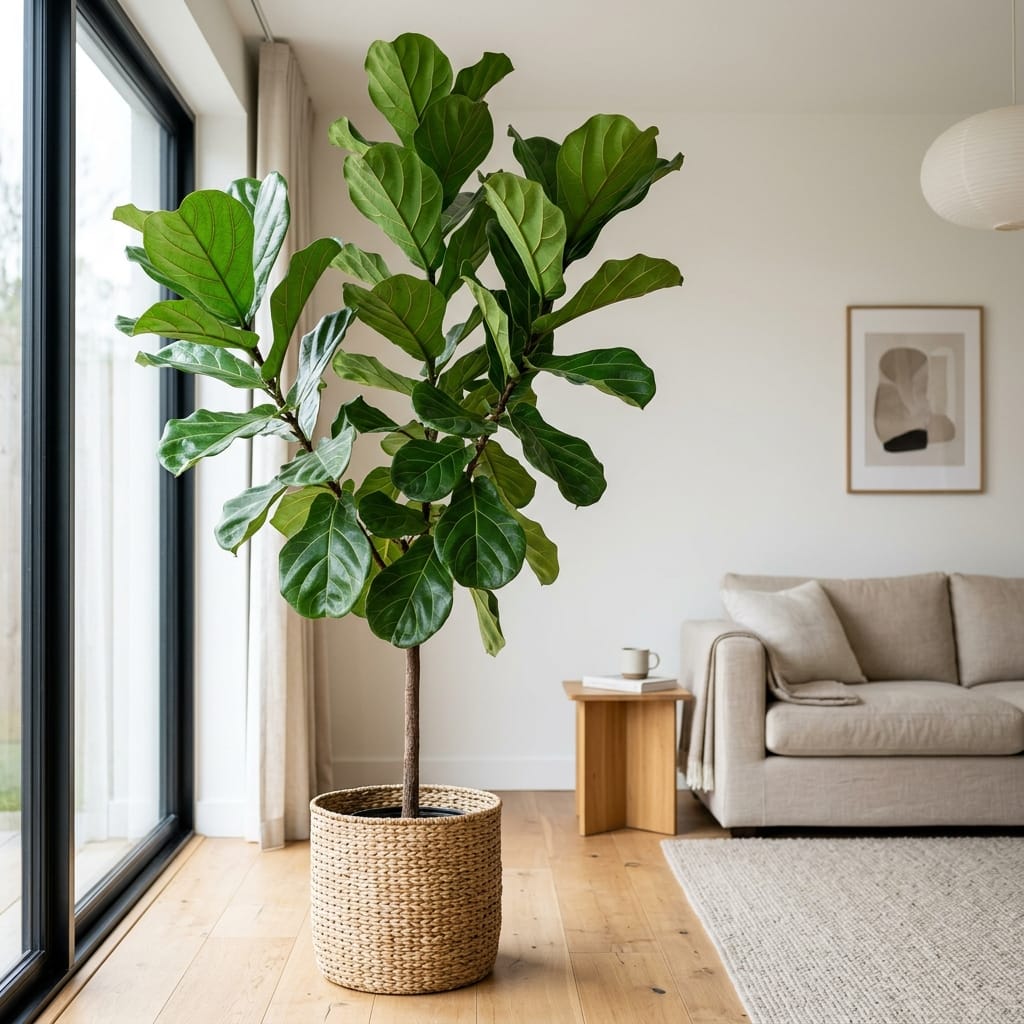
Let’s get this out of the way: fiddle leaf figs have a reputation for being divas. And honestly? It’s somewhat deserved. They’ll drop leaves if you look at them funny, develop brown spots for seemingly no reason, and generally keep you on your toes.
But here’s what I’ve learned after keeping one alive (and thriving!) for three years: fiddle leaf figs aren’t actually difficult. They’re just particular. They want consistent conditions and deeply resent change. Once you crack their code, they’re actually quite predictable.
Here’s the unfiltered, honest guide to keeping your Ficus lyrata happy.
Light — The #1 Make-or-Break Factor
If your fiddle leaf fig is struggling, check the light first. This is the single most important factor for success.
| Light Level | Result |
|---|---|
| Bright indirect (6+ hours) | ✅ Thriving — new leaves, upward growth |
| Medium indirect (3-5 hours) | 😐 Surviving — slow growth, may drop lower leaves |
| Low light | ❌ Decline — leaf drop, leggy, eventual death |
| Some direct morning sun | ✅ Actually great — they love gentle east-facing light |
| Harsh afternoon sun | ⚠️ Can burn leaves |
Best placement: Within 3 feet of a large east or south-facing window. If you don’t have this kind of light, a fiddle leaf fig might not be the right plant for you — and that’s okay. Consider a ZZ plant or pothos instead.
If your home is dark but you’re committed, a quality grow light can supplement natural light.
Watering — The Second Drama Trigger
Fiddle leaf figs want consistent, even moisture — never soggy, never bone-dry. Extremes in either direction cause problems.
My Watering Method
- Check soil — stick your finger 2 inches deep
- If dry: Water slowly and thoroughly until it drains from the bottom
- If still moist: Wait 2-3 more days and check again
- Empty the saucer — never let the pot sit in standing water
Seasonal Schedule
| Season | Frequency | Why |
|---|---|---|
| Spring/Summer | Every 7-10 days | Active growth, warmer temps |
| Fall/Winter | Every 2-3 weeks | Slower growth, less evaporation |
Pro tip: Water with room-temperature water. Cold water can shock the roots.
The most common fiddle leaf fig killer is overwatering. If leaves develop dark brown spots starting from the base, check the roots. See our overwatered plant rescue guide.
Humidity
Fiddle leaf figs come from tropical West Africa and prefer 50-65% humidity. Average home humidity (30-40%) works but isn’t ideal.
Signs of low humidity:
- Brown, crispy leaf edges
- Leaves feel stiff rather than supple
- New leaves emerge crinkled
Solutions:
- Humidifier nearby (best option)
- Pebble tray
- Grouping with other plants
- Misting (temporarily helps but dries quickly)
For the full science, read do houseplants actually need humidity?
Soil
Fiddle leaf figs need soil that’s well-draining but moisture-retentive. My mix:
- 3 parts quality potting soil
- 1 part perlite
- 1 part bark chips
This gives roots enough moisture without staying waterlogged. Ready-made aroid or tropical mixes also work well.
Drainage holes are non-negotiable. No drainage = root rot = dead fiddle leaf fig.
Repotting
Repot every 1-2 years or when you see roots circling the bottom. Spring is ideal.
- Go up 2 inches in diameter (no more — too large a pot holds too much water)
- Full repotting guide here
- Don’t repot right after buying — let the plant acclimate for 2-4 weeks first
Fertilizing
- When: Spring through early fall
- Frequency: Monthly
- Type: Balanced liquid fertilizer (10-10-10) or one formulated for ficus
- Strength: Dilute to half the recommended dose
- Winter: Stop completely
Troubleshooting — The Fiddle Leaf Fig Symptom Decoder
Brown Spots on Leaves
| Pattern | Likely Cause | Fix |
|---|---|---|
| Dark brown, starting from base | Root rot (overwatering) | Reduce watering, check roots |
| Tan/light brown on edges | Underwatering or low humidity | Water more consistently, add humidity |
| Dry, crispy brown patches | Sunburn | Move away from direct sun |
| Brown spots with yellow halo | Bacterial infection | Remove affected leaves, improve air circulation |
Dropping Leaves
Fiddle leaf figs drop leaves when stressed. Common triggers:
- Being moved — they hate environmental changes
- Temperature swings — keep away from drafts, A/C vents, and heaters
- Under or overwatering — check soil moisture
- Low light — especially lower leaves dropping
The rule: find a good spot and leave it there. Rotate the pot quarterly for even growth, but don’t move it around the house.
New Leaves Growing Small
Small new leaves usually mean insufficient light or nutrients. Move closer to a bright window and fertilize monthly during growing season.
Leggy Growth
If your fiddle leaf fig is tall and bare at the bottom, it’s probably not getting enough light. You can encourage bushier growth by:
- Pruning the top to force branching
- Notching — make a small cut above a node to stimulate a new branch
- Better light — the plant will produce leaves closer together
Common Mistakes to Avoid
- Moving the plant frequently — pick a spot and commit
- Overwatering — the #1 killer
- Using a pot without drainage — guaranteed root rot
- Ignoring dust — wipe leaves monthly with a damp cloth. Dust blocks light absorption.
- Placing near heating/cooling vents — temperature swings cause leaf drop
Where to Buy
🌿 Get a Fiddle Leaf Fig on AmazonFinal Thoughts
Fiddle leaf figs aren’t for everyone — they demand good light, consistent care, and a stable environment. But if you can give them what they want, few plants make as dramatic a statement. That first big, beautiful new leaf unfurling? Totally worth the effort.
If you’re not sure you’re ready for the commitment, start with something more forgiving from our beginner plant guide and work your way up.