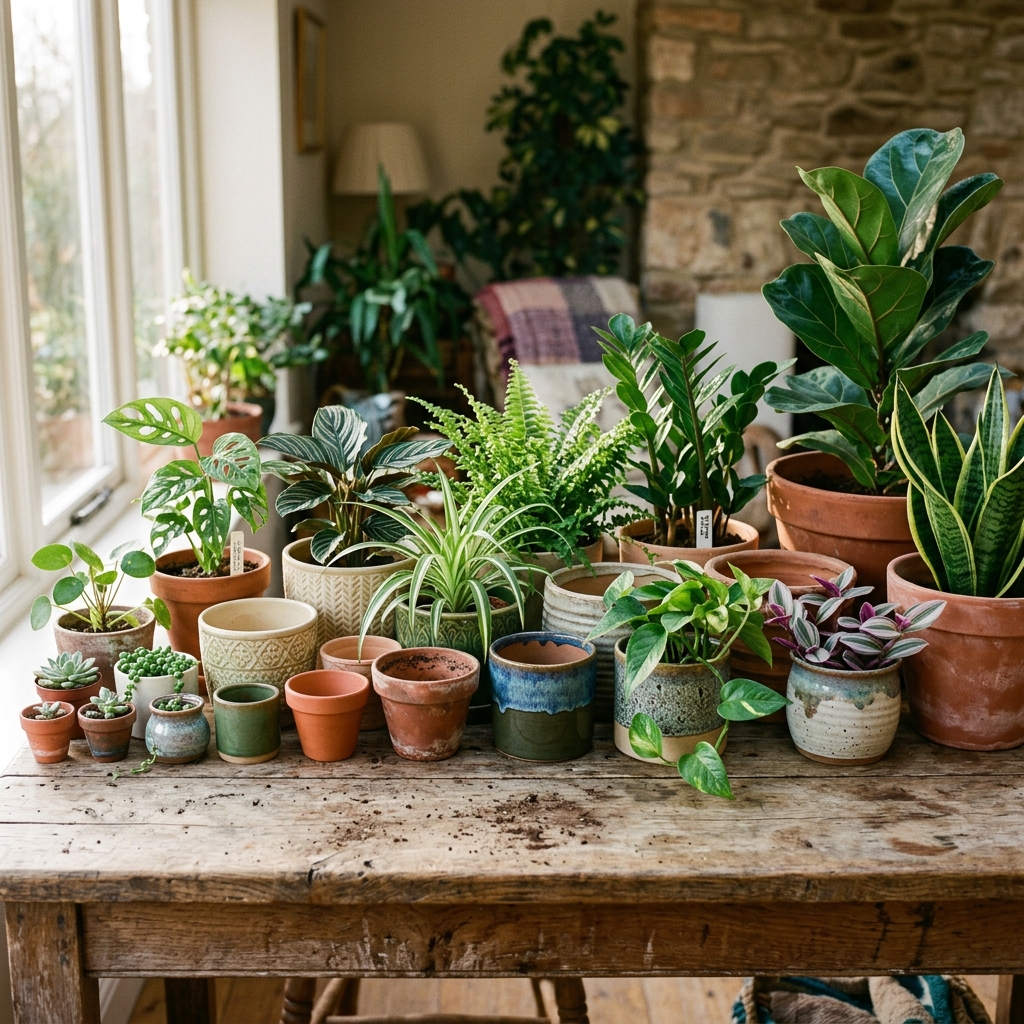
Here’s a mistake I see constantly: someone buys a small plant and puts it in a massive pot “so it has room to grow.” Three weeks later, the roots are rotting because all that extra soil stays waterlogged.
Pot size matters more than most people think. Too big and you risk root rot. Too small and growth stalls. Getting it right is one of the simplest ways to keep your plants healthy — and it’s not complicated once you understand the logic.
The 1-2 Inch Rule
When selecting a new pot (or repotting), the general rule is simple:
Go up 1-2 inches in diameter from the current pot.
That’s it. If your plant is in a 4-inch pot, move to a 5 or 6-inch pot. If it’s in a 6-inch pot, go to a 7 or 8-inch pot.
For large floor plants (10+ inch pots), you can go up 2-4 inches since the ratio of new soil to root mass stays reasonable.
Why Not Bigger?
When you skip sizes (say, 4-inch to 10-inch), the root ball sits surrounded by soil that stays wet for weeks because there aren’t enough roots to absorb the moisture. This creates:
- Root rot — the #1 plant killer (rescue guide here)
- Fungus gnats — they breed in moist soil surfaces
- Slow growth — plants often focus energy on root growth to fill the pot before putting out new leaves
How to Measure a Pot
Pots are measured by their diameter across the top (inside edge to inside edge):
| Pot Size | Common Uses |
|---|---|
| 2-3 inch | Propagations, tiny succulents |
| 4-5 inch | Small plants, herbs, seedlings |
| 6-8 inch | Medium houseplants (most common size) |
| 10-12 inch | Large plants, floor statement pieces |
| 14+ inch | Trees and very large specimens |
Nursery pots often list the size in inches — check the bottom for a stamped number.
Signs Your Plant Needs a Bigger Pot
Not sure if it’s time to repot? Look for these clues:
| Sign | What’s Happening |
|---|---|
| Roots growing out of drainage holes | Root system has outgrown the pot |
| Roots visible on soil surface | Root-bound, no more room below |
| Plant dries out within 1-2 days of watering | Not enough soil to hold moisture |
| Plant is top-heavy and tips over | Root ball too small for plant above |
| Growth has stalled despite good care | Roots are circling, plant is stuck |
| Water runs straight through without absorbing | Root mass has displaced most of the soil |
If you’re seeing these signs, check our full repotting guide for step-by-step instructions.
Pot Type: Does It Matter?
Absolutely. Different pot materials affect moisture and root health:
Terracotta (Clay)
| Pros | Cons |
|---|---|
| Porous — breathes, wicks excess moisture | Dries out quickly in summer |
| Heavy — stabilizes top-heavy plants | Fragile if dropped |
| Classic aesthetic | Can develop mineral deposits |
| Best for overwater-prone people | Not great for moisture-loving plants |
Best for: Succulents, snake plants, ZZ plants, cacti — anything that likes to dry out between waterings.
🏺 Get Terracotta Pots on AmazonGlazed Ceramic
| Pros | Cons |
|---|---|
| Non-porous — retains moisture | Heavier than plastic |
| Beautiful, decorative | Can be pricey |
| Good for moisture-loving plants | Some lack drainage holes — always check |
Best for: Calatheas, ferns, peace lilies — plants that like consistent moisture.
Plastic (Nursery Pots)
| Pros | Cons |
|---|---|
| Lightweight, cheap | Not attractive (use inside a cachepot) |
| Always has drainage holes | Doesn’t breathe |
| Easy to check root health | Retains moisture longer |
Best for: Most plants (used inside decorative cachepots). This is actually what many experienced plant owners use — nursery pot inside a pretty outer pot.
Self-Watering Pots
| Pros | Cons |
|---|---|
| Built-in water reservoir | Not great for succulents/drought-lovers |
| Reduces watering frequency | Harder to monitor moisture levels |
| Great for forgetful waterers | Can encourage overwatering in some plants |
Best for: Pothos, peace lilies, ferns, and anyone who forgets to water.
See our full self-watering pot review for top picks.
For a comprehensive breakdown, check our complete pot guide.
Pot Sizing by Plant Type
Different plants have different preferences:
Plants That Like Being Root-Bound
Some plants actually perform better when slightly cramped:
- Peace lilies — bloom more when root-bound
- Spider plants — produce more babies when snug
- Snake plants — prefer tight pots, less rot risk
- Orchids — need tight pots with minimal soil
For these, don’t rush to upsize. Only repot when truly necessary.
Plants That Need Room to Grow
Other plants are vigorous growers that need repotting more frequently:
- Monstera — fast grower, needs upgrading yearly
- Pothos — rapid root growth
- Fiddle leaf fig — wants to grow tall
- Rubber plant — steady growth, needs space
Succulents and Cacti
Shallow, wide pots work best. These plants have shallow root systems and rot easily in deep soil. Choose a pot only slightly larger than the plant.
The Cachepot Strategy
My preferred approach: keep plants in nursery pots with drainage holes, placed inside decorative cachepots.
Why this works:
- Easy to check roots — just lift out the nursery pot
- Easy to bottom-water — soak the nursery pot in a basin
- Swap decorative pots without repotting
- Always has drainage
- Protects furniture from water
When you water, either:
- Remove the nursery pot, water thoroughly, let drain, replace
- Or pour water in, wait 15 minutes, and drain excess from the cachepot
Common Pot Sizing Mistakes
- Going too big — the “room to grow” fallacy. More soil = more rot risk
- No drainage holes — the single biggest risk factor for root rot
- Reusing old soil — always use fresh potting mix when repotting
- Pot shopping by aesthetics only — consider the material’s effect on moisture
- Same pot for every plant — succulents and ferns have opposite needs
- Never repotting — even slow growers need fresh soil every 2 years
Quick Decision Guide
Here’s a flowchart for choosing the right pot:
- Is the current pot too small? → Go up 1-2 inches in diameter
- Does your plant like to dry out? (Succulents, snake plants) → Use terracotta or add extra drainage
- Does your plant like moisture? (Ferns, calatheas) → Use glazed ceramic or plastic
- Do you forget to water? → Consider self-watering pots
- Does the decorative pot have drainage? → If not, use it as a cachepot
Final Thoughts
Pot selection isn’t glamorous, but it directly affects whether your plant thrives or rots. The 1-2 inch rule, combined with a pot material that matches your plant’s moisture needs, eliminates most of the guesswork.
When in doubt: standard nursery pot with drainage holes inside a decorative cachepot. It’s the strategy professional growers use, and it works for home plant parents too.
Ready to repot? Follow our complete repotting guide for step-by-step instructions.