Overwatering is the #1 killer of houseplants — more than pests, diseases, or neglect combined. I’ve lost count of how many “why is my plant dying?” messages I’ve gotten where the answer turned out to be: too much water.
The tricky part? An overwatered plant often looks thirsty — droopy, sad, wilting. So people water it MORE, making the problem worse. It’s a vicious cycle that leads to root rot, and if you don’t catch it early, the plant is gone.
The good news: root rot is totally fixable if you act quickly. Here’s the step-by-step rescue plan.
Step 1: Identify the Problem
Signs of Overwatering
| Sign | What It Looks Like |
|---|---|
| Yellow lower leaves | Bottom leaves turn yellow and soft, progressing upward |
| Mushy stems | Base of stem feels soft and may turn brown/black |
| Droopy despite wet soil | Plant looks wilted but the soil is soggy |
| Fungus gnats | Tiny flies buzzing around the soil surface |
| Musty smell | Soil smells sour or swampy |
| Slow/no growth | Plant has stalled despite good light |
| Edema | Blisters or bumps on leaf undersides |
Overwatering vs. Underwatering
These look confusingly similar. Here’s how to tell:
| Symptom | Overwatered | Underwatered |
|---|---|---|
| Leaves | Yellow, soft, mushy | Brown, crispy, papery |
| Soil | Wet, soggy | Bone dry, pulling from pot edges |
| Stems | Mushy at base | Dry, possibly shriveled |
| Weight | Pot feels heavy | Pot feels very light |
| Smell | Musty, swampy | No smell |
The soil test: Stick your finger 2-3 inches into the soil. If it’s wet and your plant looks sick, overwatering is almost certainly the cause.
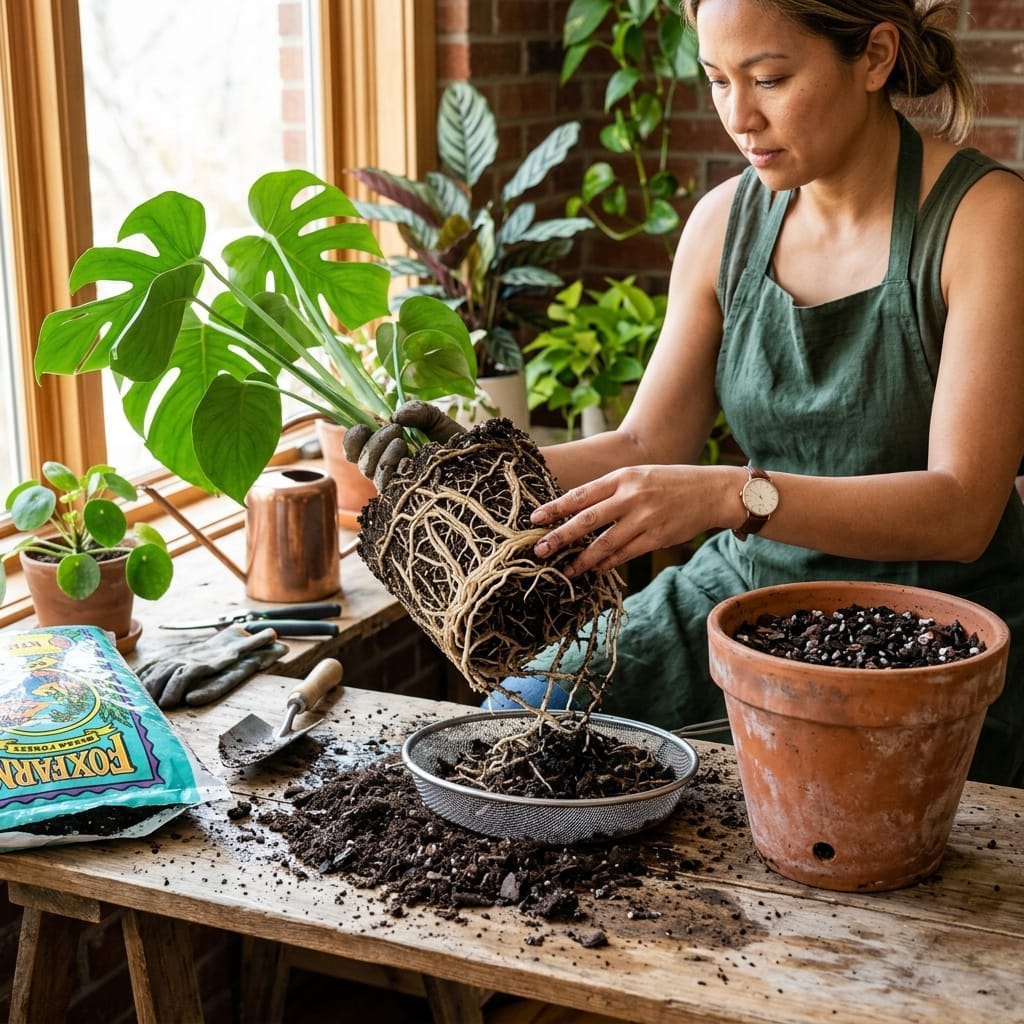
Step 2: Unpot and Inspect Roots
- Gently remove the plant from its pot
- Shake off as much soil as possible
- Rinse roots under lukewarm running water to see them clearly
What to Look For
- ✅ Healthy roots: White or light tan, firm, flexible
- ❌ Rotted roots: Brown or black, mushy, slimy, may smell bad, fall apart when touched
Step 3: Trim the Damage
Using clean, sharp scissors or shears (sterilize with rubbing alcohol):
- Cut away all brown/mushy roots. Don’t be timid — it’s better to remove too much than leave rot behind.
- Cut back to healthy tissue. White or tan = good. Keep cutting until you see healthy tissue.
- Remove any mushy or yellowed leaves. The plant needs to redirect energy to recovery.
- Optional: Dip trimmed roots in a diluted hydrogen peroxide solution (1:4 with water) to kill remaining fungi.
The honest assessment: If more than 75% of the roots are rotted, the plant’s odds are low. Consider taking healthy stem cuttings and propagating instead. Check our pothos propagation guide for the technique.
Step 4: Repot in Fresh Soil
- Clean the pot with soap and water (or use a new pot). Old soil harbors the rot-causing fungi.
- Use fresh, well-draining soil. Add extra perlite (50/50 mix with potting soil) for better drainage.
- Choose the right pot size. If you removed a lot of roots, size DOWN — a too-large pot holds excess moisture.
- Ensure drainage holes. Non-negotiable. No drainage = future rot.
- Place the plant and fill with soil. Don’t pack too tightly.
Step 5: Recovery Care
After repotting:
- DON’T water for 2-3 days. Let trimmed roots callous over.
- Place in bright indirect light — not direct sun, which stresses a recovering plant.
- Don’t fertilize for at least a month.
- Monitor closely for the first two weeks. Some leaf drop is normal as the plant adjusts.
- Water carefully going forward — only when the soil is genuinely dry.
How to Prevent Overwatering Forever
The Finger Test
Before watering, stick your finger 2 inches into the soil. If it’s moist, wait. If it’s dry, water. Do this EVERY time.
Match Your Pot to Your Habits
- Chronic overwaterer? Use terracotta pots — they breathe and dry out faster.
- Forgetful? Use plastic or glazed pots — they retain moisture longer.
Know Your Plant’s Needs
Different plants need vastly different amounts of water:
- Drought-tolerant (water every 2-4 weeks): Snake plants, ZZ plants, succulents
- Moderate (water every 1-2 weeks): Pothos, philodendrons, monstera
- Moisture-loving (keep evenly moist): Calatheas, ferns, peace lilies
See our watering mistakes guide for more tips.
Product Recommendations
1. Soil Moisture Meter
Takes the guesswork out of watering. Under $10 and saves plants.
🌱 Get a Moisture Meter2. Perlite for Drainage
Mix into any potting soil to improve drainage and prevent future overwatering.
💧 Get Perlite on AmazonFAQs
Can a plant recover from root rot? Yes, if caught early. Less than 50% root damage = good odds. More than 75% = try propagating instead.
What does root rot look like? Brown or black, mushy, smelly roots. Healthy roots are white/tan and firm.
How do I know if I’m overwatering? Yellow lower leaves, mushy stems, soggy soil, fungus gnats, musty smell.
Should I water right after repotting? No — wait 2-3 days for trimmed roots to callous over.
Can hydrogen peroxide help? Yes — a 1:4 dilution of 3% H2O2 to water kills rot-causing fungi.
Happy growing! 🌿