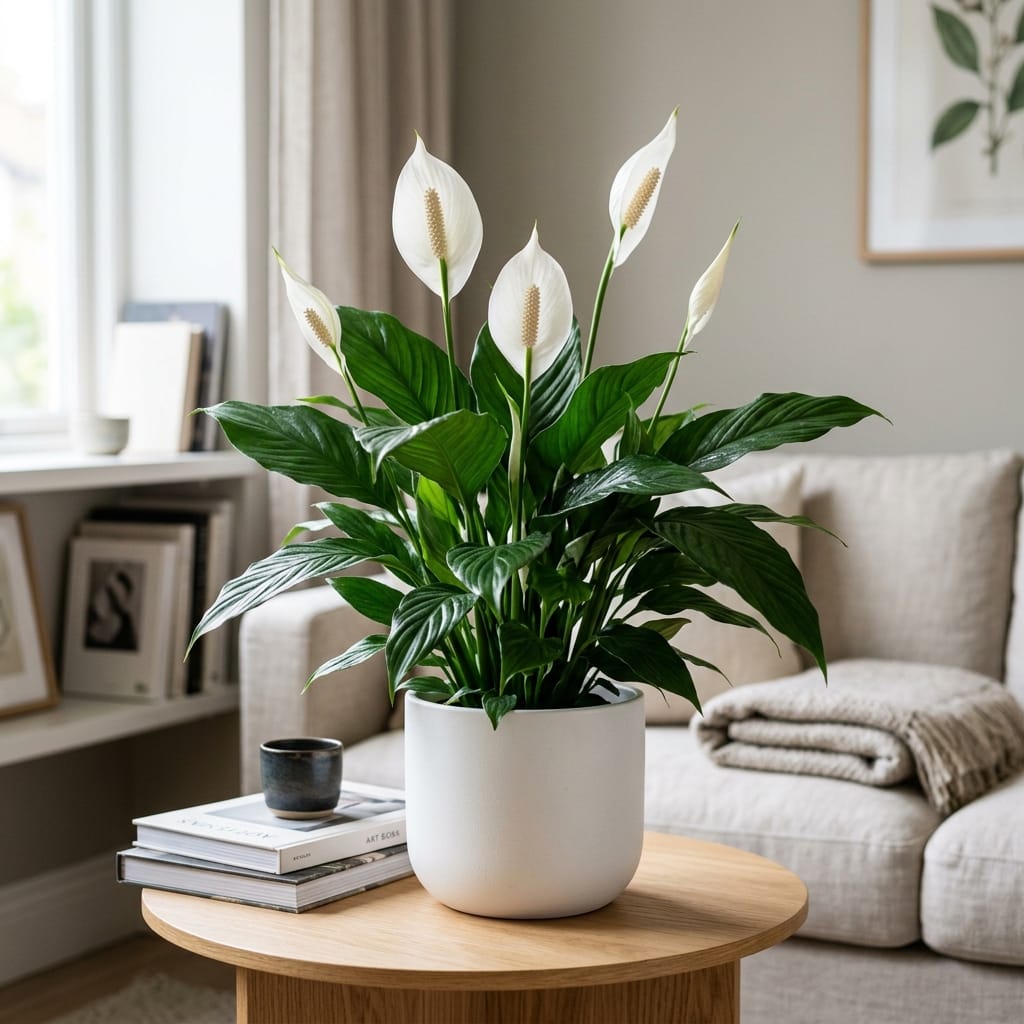
Few houseplants combine elegance, low-light tolerance, and easy care quite like the peace lily (Spathiphyllum). Those glossy dark green leaves and graceful white blooms have made it one of the most popular indoor plants in the world — and for good reason.
I’ve kept peace lilies in every apartment I’ve lived in, including one bathroom with barely any natural light. They’re incredibly forgiving, and the way they dramatically droop when thirsty (then bounce back within hours of watering) makes them perfect for people who are still learning to read their plants.
Here’s everything you need to know to keep yours thriving.
Light Requirements
Peace lilies are one of the few flowering houseplants that can bloom in low to medium indirect light. Here’s the breakdown:
| Light Level | What to Expect |
|---|---|
| Low light | Healthy foliage, but fewer (or no) blooms |
| Medium indirect | Best of both worlds — lush leaves + regular blooms |
| Bright indirect | Fastest growth and most flowers |
| Direct sun | ❌ Will scorch the leaves — avoid |
If your peace lily hasn’t bloomed in a while, try moving it closer to a window. That’s usually all it takes. Bright indirect light is the key to getting those gorgeous white spathes to appear.
Check out our guide on best grow lights for houseplants if your home doesn’t get much natural light.
Watering
Peace lilies like consistently moist soil — not soggy, not dry. Here’s my approach:
- Check the soil — stick your finger in about an inch deep
- If dry — water thoroughly until it drains from the bottom
- If still moist — check back in a day or two
The best part? Peace lilies tell you when they’re thirsty. The leaves will droop dramatically — don’t panic. Give it a good drink and it’ll perk back up within a few hours. It’s like having a plant with a built-in notification system.
Pro tip: Use filtered or distilled water if you can. Peace lilies are sensitive to chlorine and fluoride in tap water, which can cause brown leaf tips over time. If you use tap water, let it sit out overnight so the chlorine evaporates.
Avoid the most common mistakes with our guide to watering mistakes beginners make.
Humidity
Peace lilies are tropical plants that love humidity. Ideally 50-60% or higher. Signs of low humidity include:
- Brown, crispy leaf tips
- Edges of leaves turning yellow
- Leaves looking dull instead of glossy
Solutions:
- Use a humidifier near your plants
- Place on a pebble tray
- Group with other plants (they create a microclimate)
- Keep in the bathroom — peace lilies love bathroom humidity
For a deep dive into the science, read do houseplants actually need humidity?
Soil and Potting
Peace lilies do best in a well-draining potting mix that retains some moisture. A good recipe:
- 2 parts standard potting soil
- 1 part perlite (for drainage)
- 1 part peat moss or coco coir (for moisture retention)
They like to be slightly root-bound — this actually encourages blooming. Don’t rush to repot unless:
- Roots are growing out of drainage holes
- The plant dries out within a day of watering
- Growth has stalled despite good conditions
When you do repot, go only 1-2 inches larger in pot diameter.
Fertilizing
Peace lilies are light feeders. Over-fertilizing is worse than under-fertilizing.
- When: Spring through early fall (growing season)
- How often: Once a month
- What: Balanced liquid fertilizer diluted to half strength
- Winter: Skip fertilizing entirely — the plant is resting
Too much fertilizer causes brown leaf tips and salt buildup in the soil. If you see a white crust on the soil surface, flush it with water several times.
Common Problems & Solutions
Brown Leaf Tips
The #1 peace lily complaint. Usually caused by:
| Cause | Fix |
|---|---|
| Low humidity | Add humidifier or pebble tray |
| Tap water chemicals | Switch to filtered/distilled water |
| Over-fertilizing | Flush soil, reduce fertilizer frequency |
| Too much direct sun | Move to indirect light |
Yellow Leaves
Some yellowing on older (lower) leaves is completely normal — the plant redirects energy to new growth. But widespread yellowing means:
- Overwatering — check for soggy soil, reduce frequency
- Underwatering — check for bone-dry soil
- Too much light — move away from direct sun
For more help, see our yellow leaves troubleshooting guide.
No Blooms
Peace lilies typically bloom in spring, but indoor plants can bloom year-round with the right conditions:
- Move to brighter indirect light
- Let the plant become slightly root-bound
- Fertilize monthly in spring/summer
- Be patient — some varieties bloom more readily than others
Drooping
If the whole plant droops: it’s thirsty. Water it. It’ll recover within 2-4 hours. If it droops and the soil is wet, you may have root rot — check our overwatered plant rescue guide.
Varieties Worth Knowing
| Variety | Size | Notable Feature |
|---|---|---|
| Spathiphyllum ‘Sensation’ | 4-6 feet | Giant variety with huge ribbed leaves |
| Spathiphyllum ‘Domino’ | 2-3 feet | Variegated white-and-green leaves |
| Spathiphyllum ‘Petite’ | 12-18 inches | Compact, perfect for desks |
| Spathiphyllum ‘Mauna Loa’ | 3-4 feet | Classic variety, prolific bloomer |
Toxicity Warning
Peace lilies contain calcium oxalate crystals and are toxic to cats, dogs, and children if ingested. Symptoms include mouth irritation, drooling, and difficulty swallowing. Keep them elevated or out of reach.
If you need pet-safe alternatives, check out our list of houseplants safe for cats and dogs.
Where to Buy
🌿 Get a Peace Lily on AmazonFinal Thoughts
Peace lilies are genuinely one of the easiest flowering houseplants you can own. They tolerate low light, tell you when they need water, purify the air, and produce beautiful white blooms with minimal effort. If you can only own one houseplant, this is a seriously strong contender.
If you’re just getting started with indoor plants, check out our full guide to the easiest indoor plants for beginners.