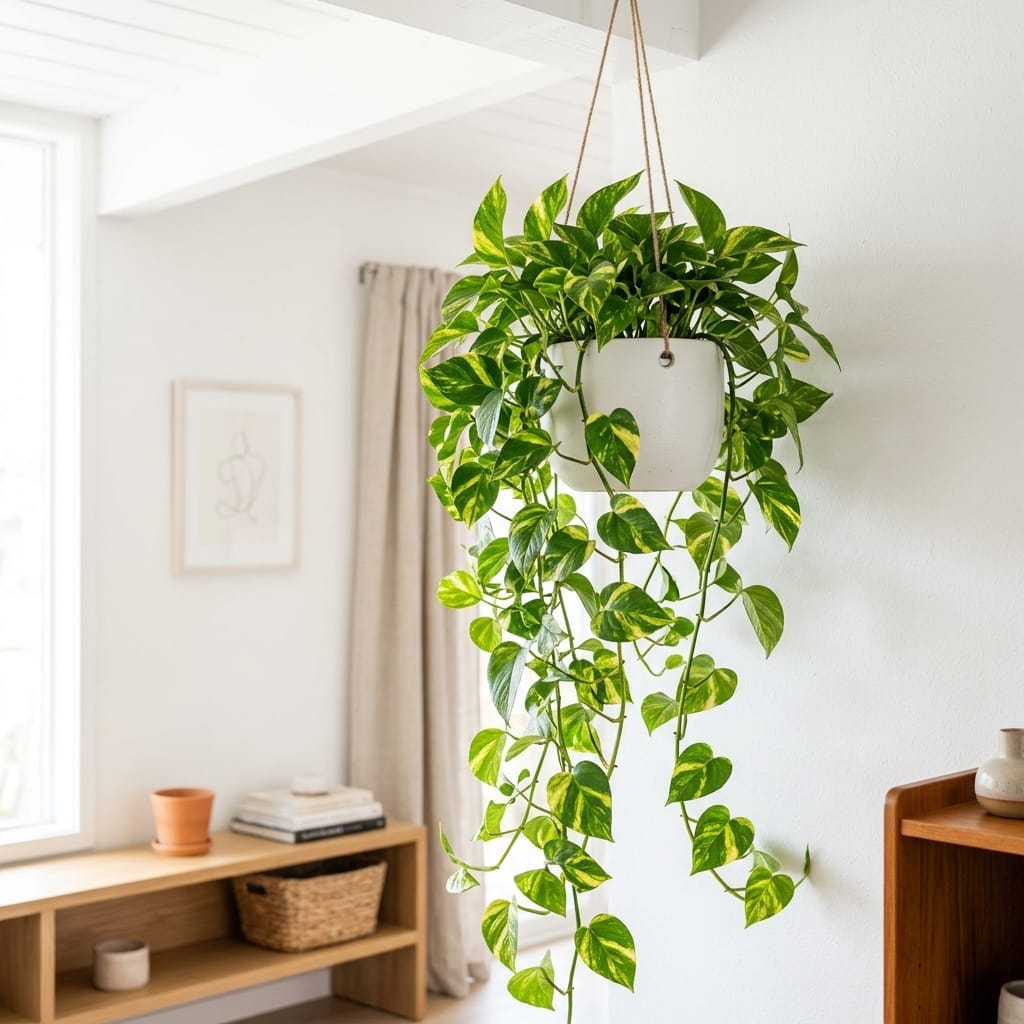
If you’ve ever walked into a friend’s apartment and seen a lush, trailing vine cascading from a shelf — chances are it was a pothos. This is the plant that taught me I could actually keep something alive, and it’s been my go-to recommendation for every beginner since.
Pothos (Epipremnum aureum) is often called “devil’s ivy” because it’s nearly impossible to kill. It tolerates low light, irregular watering, and general neglect with remarkable grace. But give it a little attention and it rewards you with explosive growth and gorgeous trailing vines.
Popular Pothos Varieties
Golden Pothos
The classic. Green leaves with golden-yellow variegation. The most common and easiest to find. Extremely hardy and fast-growing.
Marble Queen
White and green marbled leaves that look painted. Slightly slower-growing than Golden because less green surface means less chlorophyll for photosynthesis. Needs brighter light to maintain variegation.
Neon Pothos
Striking chartreuse-lime green leaves with no variegation. Genuinely glows on a shelf. Just as easy to care for as Golden but makes a much bolder statement.
Jade Pothos
Solid dark green leaves, no variegation. The best choice for very low-light spaces since it doesn’t need light to maintain leaf patterns. The toughest of all pothos varieties.
Manjula Pothos
Wide, heart-shaped leaves with swirling white, cream, and green patterns. Each leaf is unique. Slower-growing and slightly more finicky than Golden, but stunning.
Cebu Blue Pothos
Silvery-blue, arrow-shaped leaves that look completely different from other pothos. Can develop fenestrations (holes) like a monstera when it matures. A collector’s favorite.
Light Requirements
Pothos are incredibly light-flexible:
- Low light: Will survive but growth slows significantly. Variegated varieties may revert to solid green.
- Medium indirect light: The sweet spot for most varieties. Fast growth with good variegation.
- Bright indirect light: Fastest growth and best leaf color. Essential for heavily variegated types like Marble Queen.
- Direct sun: Avoid — burns leaves quickly, causing brown scorched patches.
Pro tip: If your variegated pothos is losing its white/yellow patterns and turning solid green, it needs more light. Move it closer to a window.
For spaces with no natural light, a grow light makes a huge difference. See our grow light guide.
Watering
Pothos are incredibly forgiving with water:
- When to water: When the top 1-2 inches of soil feel dry. Typically every 7-14 days.
- The droop test: Pothos literally tell you when they’re thirsty — the leaves will droop noticeably. Water them and they perk back up within hours. I actually prefer waiting for the slight droop rather than watering on a schedule.
- How to water: Soak thoroughly until water drains from the bottom. Empty the saucer. Don’t let it sit in standing water.
Common mistake: Overwatering. If the soil is constantly moist, the roots will rot. When in doubt, wait another day or two. Learn more in our watering mistakes guide.
Soil and Pots
- Soil: Standard indoor potting mix works great. For better drainage, add perlite (2 parts potting mix : 1 part perlite).
- Pots: Any pot with drainage holes. Pothos aren’t picky. They look great in hanging baskets, on shelves, or trained up a moss pole.
- Repotting: Every 1-2 years, or when roots circle the pot. Go up one pot size. Spring is ideal.
See our best pots guide for recommendations.
Propagation: The Easiest Plant to Multiply
Pothos are the absolute easiest houseplant to propagate. Here’s the water method:
- Cut a stem section with at least one node (the small bump where leaves emerge)
- Remove the leaf closest to the cut end
- Place in a jar of water with the node submerged
- Put in bright indirect light
- Roots appear in 1-2 weeks
- Plant in soil once roots are 2-3 inches long
For a detailed walkthrough, check our pothos propagation guide.
Growth hack: Propagate cuttings and plant them back into the mother pot. This creates a much fuller, bushier plant instead of a single trailing vine.
Training and Display Ideas
Pothos are incredibly versatile for decorating:
- Trailing from shelves — let vines cascade down for a waterfall effect
- Hanging baskets — classic look, keeps vines out of reach of pets
- Climbing a moss pole — pothos actually produce larger leaves when climbing, similar to their natural habitat
- Trained along walls — use small adhesive hooks to guide vines along a wall or ceiling
Common Problems
| Problem | Cause | Fix |
|---|---|---|
| Yellow leaves | Overwatering or too much sun | Let soil dry more, move from direct light |
| Brown crispy tips | Low humidity or underwatering | Increase watering slightly, mist occasionally |
| Leggy, sparse growth | Too little light | Move to brighter spot |
| Wilting/drooping | Needs water (usually) | Water thoroughly, will recover in hours |
| Loss of variegation | Not enough light | Move closer to window or add grow light |
| Brown spots on leaves | Sunburn from direct light | Move away from direct afternoon sun |
| Root rot | Overwatering, poor drainage | Repot in fresh dry soil, trim rotted roots |
For more on yellowing issues, see our yellow leaves troubleshooting guide.
Product Recommendations
1. Live Golden Pothos Plant
A healthy starter pothos ready to grow. Golden pothos is the most forgiving variety — perfect for beginners.
🌿 Get a Pothos on Amazon2. Moss Pole for Climbing
Encourage your pothos to climb for bigger, more dramatic leaves. Moss poles provide the support and moisture climbing plants love.
🌱 Get a Moss PoleConfused about pothos vs philodendron? They look almost identical but have key differences. Read our pothos vs philodendron comparison.
Looking for something even tougher? Compare pothos with our other unkillable favorites in the snake plant care guide and ZZ plant care guide.
FAQs
How often should I water my pothos? Water when the top 1-2 inches of soil feel dry, typically every 1-2 weeks. They’ll droop when thirsty and perk back up after watering.
Can pothos grow in water permanently? Yes! Change water every 1-2 weeks and add liquid fertilizer monthly. Growth is slower but the plant stays healthy.
Why are my pothos leaves turning yellow? Most commonly overwatering. Also check for too much direct sun, cold drafts, or natural aging of the oldest leaves.
How do I make my pothos fuller? Prune long vines and propagate the cuttings back into the same pot. Ensure adequate light to prevent leggy growth.
Are pothos toxic to pets? Yes, mildly toxic. Keep out of reach or see our pet-safe plants guide.
What’s the difference between pothos and philodendron? Pothos have thicker, waxier leaves; philodendrons are thinner and smoother. See our full comparison.
Happy growing! 🌿