Introduction
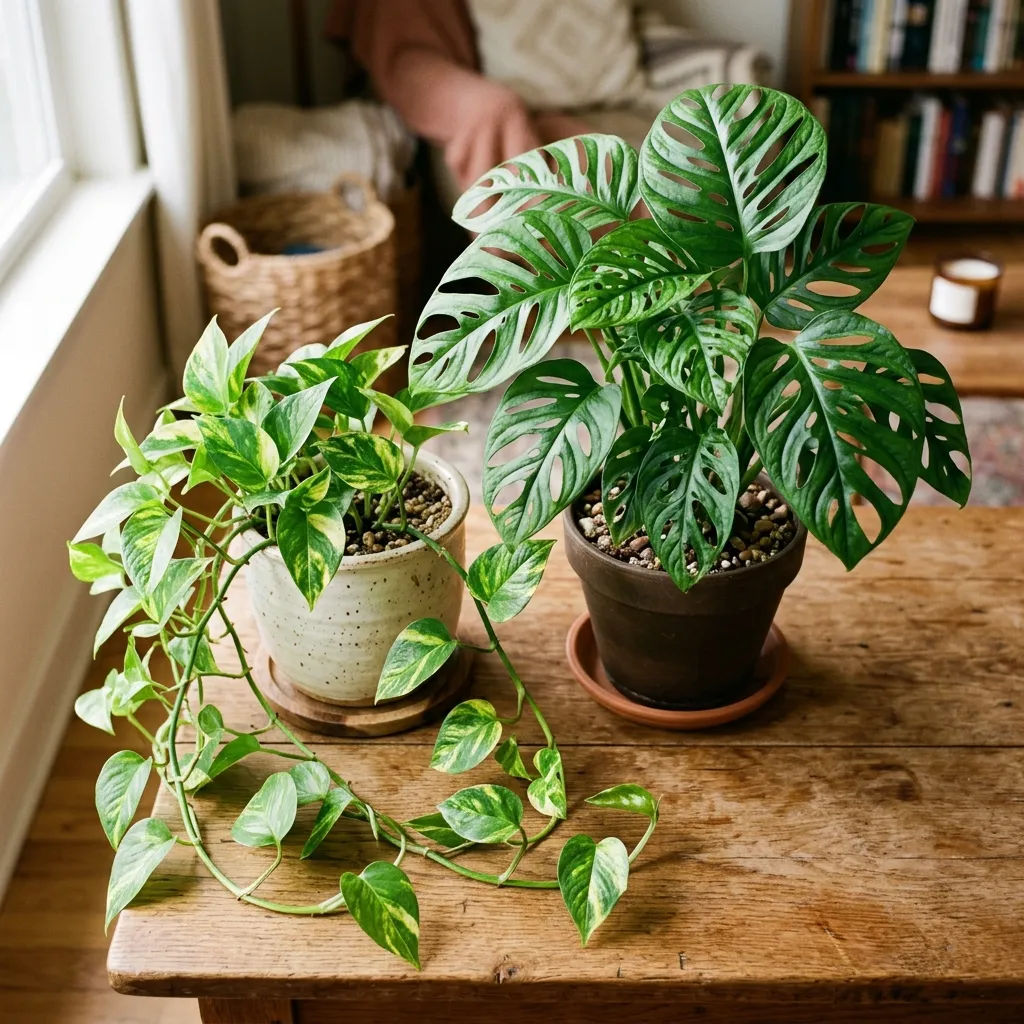
If you’ve spent any time scrolling through plant content online, you’ve almost certainly come across two names over and over: pothos and monstera. They’re both aroids — members of the Araceae family — and they both have that lush, tropical look that makes a room feel alive. But beyond sharing a plant family, these two are surprisingly different in how they grow, what they need, and the kind of statement they make in your space.
I remember standing in a nursery a few years back, holding a $6 pothos in one hand and eyeing a $35 monstera across the aisle. I grabbed both, and honestly, that was one of the best decisions I’ve made as a plant parent. They complement each other perfectly — the pothos cascading off my bookshelf while the monstera anchors the corner of my living room like a piece of living sculpture.
In this guide, I’ll break down everything you need to know to decide between these two — or, like me, convince yourself you need both. We’ll compare care difficulty, growth habits, light requirements, toxicity, propagation, and cost so you can make the right call for your home and skill level.
Quick Comparison Table
| Feature | Pothos | Monstera Deliciosa |
|---|---|---|
| Difficulty | ⭐ Beginner-proof | ⭐⭐ Easy-moderate |
| Growth Habit | Trailing/climbing vine | Upright climber, large leaves |
| Mature Leaf Size | 4-8 inches | 12-36 inches |
| Light Needs | Low to bright indirect | Medium to bright indirect |
| Watering | When top inch is dry | When top 2 inches are dry |
| Growth Speed | Fast (several feet/year) | Moderate (5-8 new leaves/year) |
| Propagation | Very easy (water or soil) | Easy (water or soil) |
| Toxicity | Toxic to pets and humans | Toxic to pets and humans |
| Average Price | $5-15 | $15-50+ |
| Space Needed | Minimal (trails vertically) | Moderate to large |
Appearance and Aesthetic
This is where pothos and monstera diverge most dramatically, and it’s usually the deciding factor for people.
Pothos has heart-shaped leaves that typically stay between 4 and 8 inches long indoors. The classic Golden Pothos has green leaves splashed with golden-yellow variegation, but you’ll also find Marble Queen, Neon, Jade, and N’Joy varieties. It’s a trailing vine that looks stunning cascading from a high shelf, hanging basket, or trained along a wall. For more on getting the most out of this plant, check out my complete pothos care guide.
Monstera deliciosa is in a completely different league when it comes to visual impact. Its leaves can grow over two feet wide with those iconic splits and holes (called fenestrations) that have made it an interior design darling. Young monsteras start with small, solid heart-shaped leaves that can actually be confused with a large pothos or philodendron — I’ve seen them mislabeled at stores more than once. The real magic happens as the plant matures and those dramatic splits appear. If your monstera isn’t developing splits, I wrote a whole post on why your monstera isn’t splitting that’s worth reading.
The Verdict on Looks
If you want a statement piece that draws the eye and anchors a room, monstera wins hands down. If you want something versatile that adds greenery without dominating a space, pothos is your plant.
Care Difficulty
Both of these plants have reputations as easy-care houseplants, and that reputation is well-earned. But there is a meaningful difference.
Pothos: The Unkillable Vine
I’m not exaggerating when I say pothos is one of the hardest houseplants to kill. I’ve left mine unwatered for three weeks during a vacation and come home to find it a little droopy but perfectly fine after a good soak. It tolerates low light, fluorescent office lighting, irregular watering, and the kind of benign neglect that would send a calathea to the plant afterlife.
If you’re just starting your plant journey, pothos should be on your shortlist. I included it in my roundup of the easiest indoor plants for beginners for exactly this reason.
Monstera: Easy but With Expectations
Monstera is still an easy plant — don’t let anyone tell you otherwise. But it does have some preferences that, if ignored, will keep it from looking its best. It wants brighter light than pothos to develop those signature fenestrations. It appreciates consistent moisture without being soggy. And as it grows, it needs support (a moss pole or trellis) and enough floor space to spread out.
In my experience, monstera goes from “easy” to “slightly demanding” once it gets large. Repotting a four-foot monstera is a two-person job, and finding a pot big enough that doesn’t cost a fortune is its own adventure. My monstera care guide walks through all of this in detail.
Light Requirements
Pothos is famously tolerant of low light. It won’t grow fast in a dim corner, and variegated varieties may lose some of their coloring, but it will survive. It thrives in medium to bright indirect light, and that’s where you’ll see the most growth and the best variegation.
Monstera really does need brighter conditions. It can survive in medium light, but if you want large leaves with fenestrations — which is the whole point of owning a monstera — you need bright indirect light. Direct morning sun is fine; harsh afternoon sun will scorch the leaves.
I keep my pothos in my home office, which gets moderate north-facing light, and it’s perfectly happy. My monstera lives near an east-facing window where it gets a couple hours of gentle morning sun. The difference in their placement wasn’t accidental — it’s about matching each plant to the light it actually needs.
If your space doesn’t have great natural light, check out my guide on the best grow lights for houseplants — a good grow light can make either plant thrive in an otherwise dim room.
Watering and Humidity
Watering
Both plants prefer the “soak and dry” method, but their timing is different:
- Pothos: Water when the top inch of soil feels dry. In my experience, that’s roughly every 7-10 days in summer and every 14+ days in winter. It’s very forgiving of underwatering and will visibly droop when thirsty — then perk right back up after a drink.
- Monstera: Water when the top 2 inches of soil feel dry. It has a larger root system and holds more moisture, so overwatering is the bigger risk here. Yellow lower leaves are usually the first sign you’re overdoing it.
Humidity
Both plants appreciate humidity above 40%, but neither is as fussy about it as tropical divas like calatheas. Monstera benefits a bit more from higher humidity (50-60%), especially for clean leaf unfurling. In my experience, average household humidity is fine for both — I only run a humidifier in the driest months of winter.
Growth Habits and Space Requirements
This is a practical consideration that a lot of people overlook when choosing between these two.
Pothos grows as a vine. It can trail down from a shelf, climb a moss pole, or be trained along walls and ceilings with small hooks. It’s incredibly space-efficient because it grows vertically or horizontally — it doesn’t take up floor space unless you want it to. A single pothos can fill an entire wall over time without requiring any floor real estate at all.
Monstera is a different story. It grows upright and outward, with large leaves that need room to spread. A mature monstera can easily be 4-6 feet wide. It needs floor space, and as it grows, it benefits from a moss pole or stake to keep it from flopping over. If you’re working with a small apartment, this matters — I covered some better options for tight spaces in my post on the easiest indoor plants for beginners.
Propagation
Both pothos and monstera are easy to propagate, which is one of the joys of owning aroids.
Pothos Propagation
Pothos is probably the single easiest houseplant to propagate. Snip a cutting below a node, stick it in water, and you’ll have roots within a week or two. I’ve propagated pothos in old coffee mugs on my kitchen windowsill with a 100% success rate. I wrote a detailed walkthrough in my how to propagate pothos guide.
Monstera Propagation
Monstera propagation is also straightforward, but it’s slower. You need a cutting with at least one node and ideally an aerial root. Water propagation works well, but rooting takes 3-6 weeks instead of the 1-2 weeks you’d see with pothos. The cuttings are also much larger and bulkier to handle.
🌿 Grab a Propagation Station — Perfect for Rooting Pothos and Monstera CuttingsToxicity
I want to be upfront about this: both pothos and monstera are toxic to cats, dogs, and humans. They contain calcium oxalate crystals that can cause mouth irritation, drooling, and vomiting if chewed or ingested.
In practice, most pets leave these plants alone after a single nibble because the crystals cause immediate discomfort. But if you have a particularly curious cat or a puppy that chews everything, you’ll want to keep both plants well out of reach — or choose a pet-safe alternative entirely.
Price and Availability
Here’s where pothos has a clear advantage:
- Pothos is one of the cheapest houseplants you’ll find. A 6-inch pot of Golden Pothos typically runs $5-15 at garden centers, big-box stores, and online. It’s available almost everywhere, year-round.
- Monstera deliciosa usually starts around $15-20 for a small plant and can run $30-50+ for a specimen with mature, fenestrated leaves. Variegated monstera varieties (like Thai Constellation or Albo) can cost $50-200+.
If you’re building a plant collection on a budget, pothos gives you the most bang for your buck — and since it propagates so easily, one plant can quickly become five.
🌿 Get a Golden Pothos Delivered to Your DoorFor a full breakdown of pothos versus its most commonly confused cousin, check out my pothos vs philodendron comparison.
Which Should You Choose?
Here’s my honest recommendation after growing both for years:
Choose pothos if you:
- Are a complete beginner
- Have low to moderate light
- Want a trailing plant for shelves, hanging baskets, or wall displays
- Are working with a tight budget
- Want something nearly impossible to kill
Choose monstera if you:
- Have bright indirect light available
- Want a bold, architectural statement plant
- Have floor space for a larger plant
- Don’t mind a slightly higher price tag
- Want those iconic split leaves for your space
Choose both if you:
- Want variety in your collection (seriously, they look great together)
- Have different light conditions in different rooms
- Enjoy the process of growing and caring for plants
In my own home, pothos fills the supporting roles — trailing off bookshelves, brightening the bathroom, adding green to my office. Monstera plays the lead — it’s the first thing people notice when they walk into my living room. They’re not competitors; they’re teammates.
FAQs
Q: Is pothos easier to care for than monstera? A: Yes. Pothos is one of the most forgiving houseplants available, tolerating low light, irregular watering, and neglect far better than monstera. Monstera isn’t hard, but it does need brighter light and more consistent moisture to thrive.
Q: Can pothos and monstera live in the same room? A: Absolutely. Both enjoy similar temperatures (65-85°F) and moderate humidity. Place the monstera closer to the window for brighter indirect light and let the pothos trail from a shelf farther back in the room.
Q: Are pothos and monstera toxic to pets? A: Yes, both plants contain calcium oxalate crystals and are toxic to cats and dogs if ingested. Keep them out of reach of curious pets or consider pet-safe alternatives.
Q: Which plant grows faster, pothos or monstera? A: Pothos generally grows faster in terms of vine length, easily adding several feet per year. Monstera grows more slowly but produces much larger individual leaves over time.
Q: Why does my monstera have small leaves without splits? A: Young monstera plants produce small, heart-shaped leaves without fenestrations. Splits develop as the plant matures and receives adequate bright indirect light. Low light is the most common reason for leaves that never split.
Happy growing! 🌿