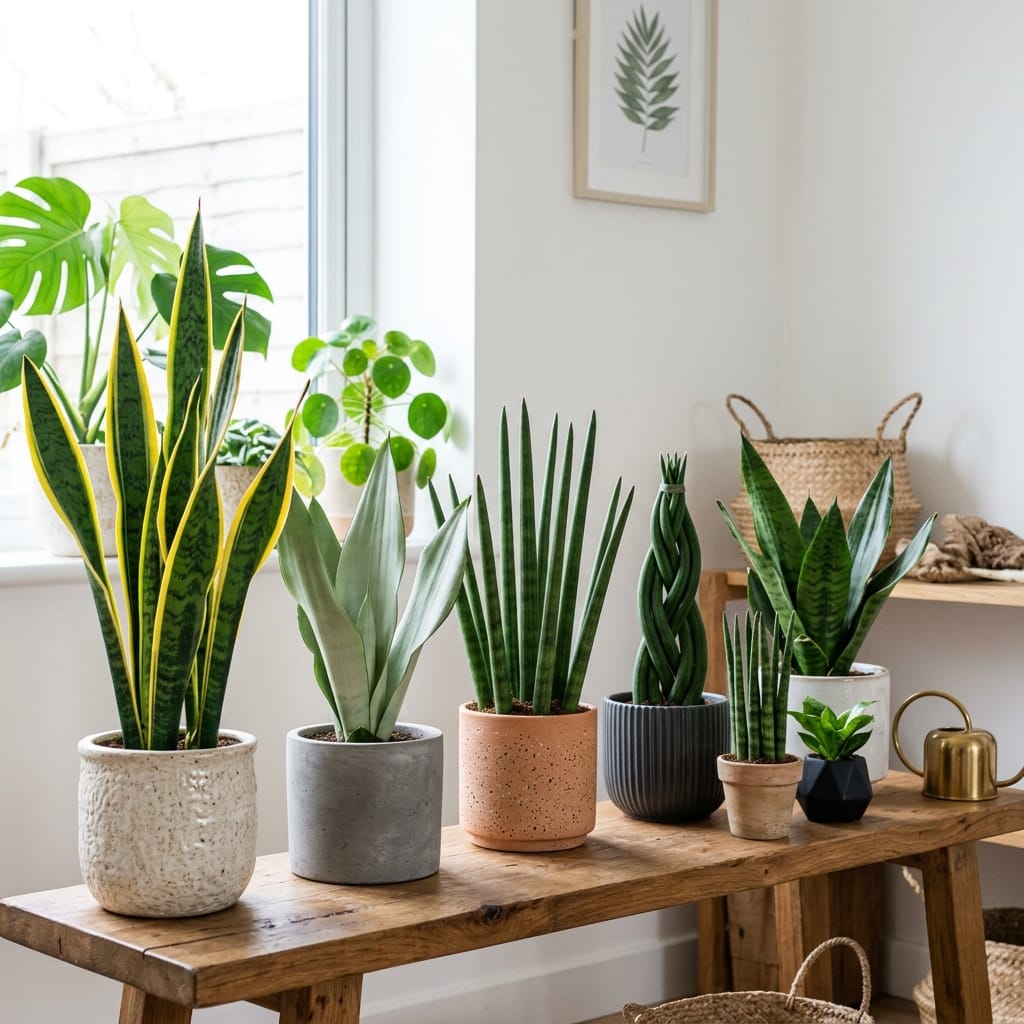
If I could only recommend one houseplant to a beginner, it would be a snake plant every single time. I’ve had mine for over four years now, and it has survived forgotten waterings, a dark corner phase, a move between apartments, and even an enthusiastic cat. It just keeps growing.
Snake plants (Sansevieria, recently reclassified as Dracaena trifasciata — but let’s be real, everyone still calls them snake plants) are among the most forgiving houseplants on Earth. But “hard to kill” doesn’t mean “impossible to kill,” and understanding what they actually want will take yours from merely surviving to genuinely thriving.
Popular Snake Plant Varieties
There are over 70 species of snake plants, but here are the ones you’ll most commonly find:
Sansevieria trifasciata ‘Laurentii’
The classic. Tall, sword-shaped leaves with bright yellow margins and dark green horizontal stripes. Grows 2-4 feet tall.
Sansevieria trifasciata ‘Moonshine’
One of my personal favorites. Silvery-green leaves that almost glow in indirect light. More compact and has a modern, minimalist vibe.
Sansevieria cylindrica
Completely different look — round, tube-shaped leaves that grow in a fan pattern. Sometimes sold braided. Makes a great statement piece.
Sansevieria trifasciata ‘Whitney’
A compact variety with shorter, wider leaves and white-edged margins. Perfect for desks or small shelves.
Light Requirements
Snake plants are famous for tolerating low light, but there’s a nuance:
- Low light: They’ll survive, but growth will be very slow and leaf markings may fade.
- Bright indirect light: The sweet spot. Best growth and most vivid leaf colors.
- Direct sun: Can handle a few hours of morning sun. Avoid harsh afternoon sun which scorches leaves.
My experience: I moved my Laurentii from a dim hallway to a bright east window and it went from producing one leaf a year to three in a single growing season.
If your space is really dark, consider a grow light. Our grow light guide has recommendations.
Watering: The #1 Thing to Get Right
Overwatering kills more snake plants than anything else. These are drought-tolerant plants with thick, water-storing leaves.
The Simple Rule
Water only when the soil is completely dry — all the way down. Stick your finger 2-3 inches into the soil. If it feels even slightly moist, wait.
Seasonal Schedule
| Season | Frequency | Notes |
|---|---|---|
| Spring/Summer | Every 2-3 weeks | Active growing season |
| Fall | Every 3-4 weeks | Growth slowing |
| Winter | Every 4-6 weeks | Near-dormant, water very sparingly |
Watering Tips
- Soak and dry: Water thoroughly until it drains from the bottom, then let it dry completely.
- Never let it sit in water. Empty the saucer after watering.
- Terracotta pots help — they wick excess moisture from roots.
- When in doubt, don’t water. A thirsty snake plant recovers easily. An overwatered one might not.
Check out our guide on common watering mistakes beginners make. Already overwatered? See our root rot recovery guide.
Soil and Repotting
Snake plants need soil that drains fast. Soggy soil is a death sentence.
Best Soil Mix
A cactus/succulent mix is ideal. For even better drainage, mix 2 parts cactus mix with 1 part perlite. We have a dedicated guide on the best soil for snake plants.
When to Repot
- Every 2-3 years, or when roots grow out of drainage holes
- Snake plants like being slightly root-bound — it can encourage pup production
- Go up only one pot size when repotting
- Spring is the best time
For detailed repotting instructions, see our step-by-step repotting guide. Choose a pot with drainage holes — non-negotiable. See our best pots for indoor plants guide.
🌱 Get Premium Snake Plant SoilPropagation: Make More Snake Plants for Free
Method 1: Division (Easiest)
When your plant produces pups (baby plants), separate them during repotting:
- Remove the plant from its pot
- Gently separate the pup, keeping roots attached
- Plant in its own small pot with well-draining soil
- Water lightly and place in bright, indirect light
Method 2: Leaf Cuttings in Water
- Cut a healthy leaf into 3-4 inch sections
- Mark which end is “down” — cuttings won’t root upside down
- Let cuts callous for 24-48 hours
- Place bottom end in water, about 1 inch deep
- Change water weekly — roots appear in 4-8 weeks
Method 3: Leaf Cuttings in Soil
Same preparation, but stick calloused cuttings directly into moist perlite or cactus mix. Takes longer but produces stronger roots.
Important: Propagating variegated varieties (like Laurentii) from leaf cuttings usually causes the babies to lose their yellow edges. Only division preserves variegation.
Common Problems and Fixes
| Problem | Likely Cause | Fix |
|---|---|---|
| Mushy, soft leaves | Overwatering / root rot | Stop watering, check roots, repot in dry soil |
| Brown, crispy tips | Low humidity or underwatering | Slight increase in watering |
| Leaves falling over | Overwatering or insufficient light | Address root health, brighter location |
| Yellow leaves | Overwatering or too much direct sun | Reduce water, move from direct sun |
| No new growth | Low light or winter dormancy | Brighter spot, wait for spring |
| Wrinkled leaves | Severe underwatering | Water thoroughly; perks up within days |
| Foul smell from soil | Root rot | Unpot, remove rotted roots, fresh dry soil |
For more on yellowing issues, see our yellow leaves troubleshooting guide.
Snake Plant Benefits
Air Purification
Snake plants made NASA’s list of air-purifying plants. They filter formaldehyde, benzene, and trichloroethylene. They also perform CAM photosynthesis — converting CO2 to oxygen at night — making them ideal bedroom plants.
Virtually Indestructible
Studies show indoor plants reduce stress and improve mood. A plant that always looks good and never dies? That’s a win for anyone who’s felt guilty about a dying houseplant.
Comparing with another unkillable plant? Read our snake plant vs. ZZ plant comparison.
Product Recommendations
1. Costa Farms Snake Plant
A healthy, established snake plant shipped in a grower’s pot — great for beginners.
🌿 Get Your Snake Plant on Amazon2. FoxFarm Ocean Forest Potting Soil
Premium, well-draining mix that works great for snake plants with extra perlite.
🌱 Get Premium Potting Soil3. Self-Watering Planters
These help prevent overwatering by giving the plant control over moisture intake.
🏺 Shop Planters on AmazonFAQs
How often should I water my snake plant? Water every 2-4 weeks, allowing the soil to dry out completely between waterings. In winter, you may only need to water once a month. Overwatering is the #1 killer of snake plants.
Can snake plants survive in low light? Yes! They’ll survive in low light, though they grow faster and develop more vivid markings in bright, indirect light. They can even handle some direct sun.
Are snake plants toxic to pets? Yes, mildly toxic to cats and dogs if ingested. For pet-safe alternatives, see our pet-safe houseplants guide.
How do I propagate a snake plant? Division is easiest — separate pups when repotting. Leaf cuttings work too but take 2-3 months.
Why is my snake plant drooping? Most commonly overwatering, too little light, or being top-heavy. Let soil dry, move to brighter light, and repot if needed.
Do snake plants purify the air? Yes — NASA-verified. They convert CO2 to oxygen at night, making them excellent bedroom plants.
How fast do snake plants grow? Moderate growers: 2-4 new leaves per year in good conditions. Growth slows in low light.
Can I put my snake plant outside in summer? Yes! Partial shade is best. Bring inside before temps drop below 50°F (10°C).
Happy growing! 🐍🌿