Introduction
If someone asked me to recommend exactly two houseplants to a beginner, I wouldn’t even hesitate: snake plant and pothos. These two have earned their spot as the most popular starter plants for good reason — they’re both incredibly forgiving, widely available, and attractive enough to make any room feel more alive.
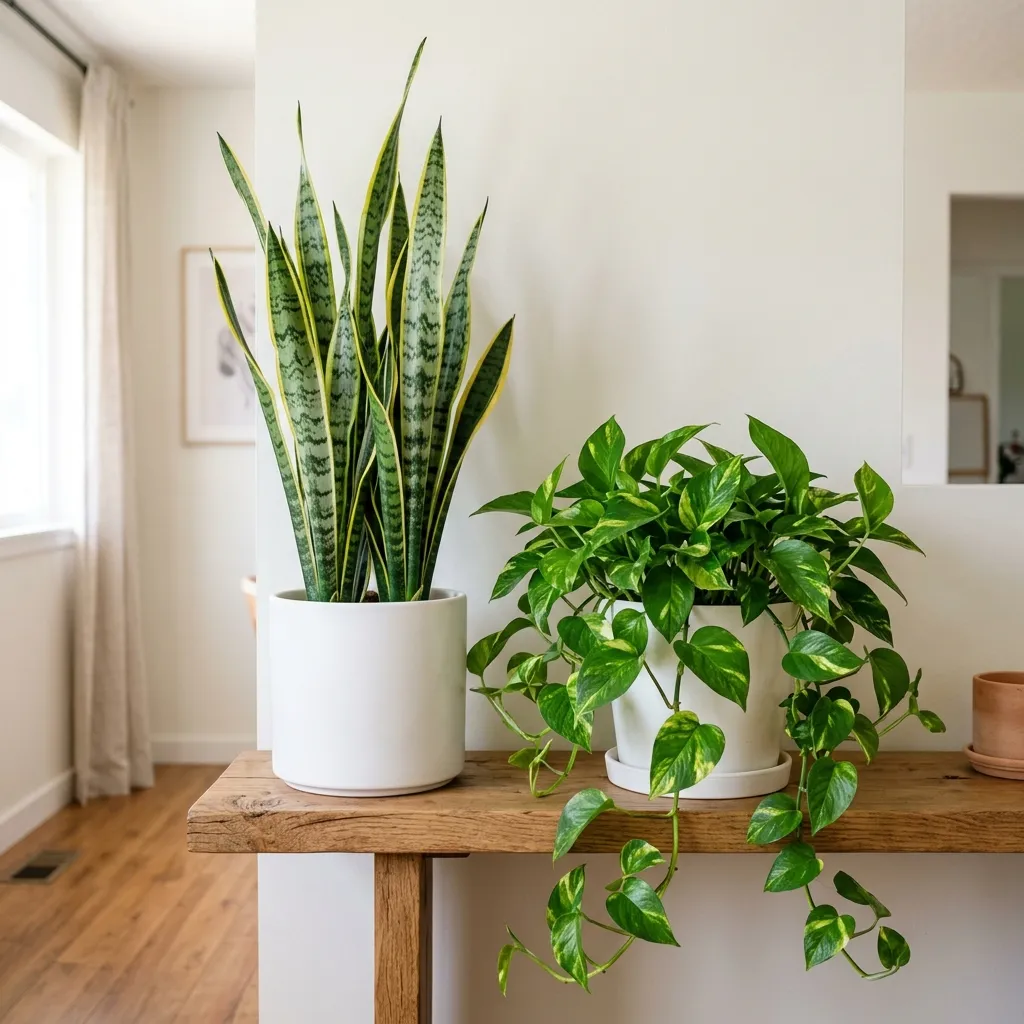
But despite both being labeled “impossible to kill,” they’re actually quite different plants. A snake plant stands tall and architectural, like a living sculpture. A pothos cascades and trails, softening shelves and surfaces with flowing vines. They have different watering schedules, different display options, and they fill very different roles in a room.
When I first started collecting houseplants, these two were my gateway. My snake plant sat stoically on my bedroom nightstand while my pothos crept across the top of my kitchen cabinets. Five years later, I still have both of those original plants — and they’ve each multiplied into several more. In this guide, I’ll help you figure out which one suits your space, your lifestyle, and your aesthetic — or make the case for getting both.
Quick Comparison Table
| Feature | Snake Plant | Pothos |
|---|---|---|
| Difficulty | ⭐ Nearly indestructible | ⭐ Beginner-proof |
| Growth Habit | Upright, architectural | Trailing/climbing vine |
| Mature Size | 2-4 feet tall | Vines up to 10+ feet |
| Light Needs | Low to bright indirect | Low to bright indirect |
| Watering | Every 2-4 weeks | Every 7-14 days |
| Humidity | Not picky at all | Not picky (40%+ preferred) |
| Growth Speed | Slow | Fast |
| Propagation | Slow (leaf cuttings, division) | Very fast (water cuttings) |
| Toxicity | Toxic (saponins) | Toxic (calcium oxalate) |
| Average Price | $10-25 | $5-15 |
Appearance and Display Options
The aesthetic difference between these two is night and day, which is exactly why they pair so well together.
Snake Plant: Vertical and Sculptural
Snake plants (Dracaena trifasciata, formerly Sansevia) grow as stiff, upright leaves that emerge from the soil in a tight cluster. Depending on the variety, leaves can be dark green with lighter horizontal bands, edged in bright yellow (Laurentii), or even cylindrical (Cylindrica). They have a clean, modern look that works equally well on a desk, a nightstand, or as a floor plant.
The upright growth habit means snake plants take up very little horizontal space. A tall snake plant in a sleek pot can fit in a narrow corner, beside a doorway, or on a slim shelf where a bushy or trailing plant simply wouldn’t work. For a complete care walkthrough, head over to my snake plant care guide.
Pothos: Trailing and Lush
Pothos (Epipremnum aureum) is all about the vine. Its heart-shaped leaves cascade downward from whatever surface you place it on, and left to its own devices, a single vine can trail 10 feet or more indoors. You can train it along walls, drape it from hanging baskets, wrap it around a curtain rod, or let it tumble off a high bookshelf.
The visual effect is completely different from a snake plant — pothos adds movement and softness where snake plant adds structure and form. Golden Pothos, with its green and yellow variegation, is the most common variety, but Marble Queen, Neon, and Jade are all gorgeous options. My pothos care guide covers all the popular varieties and their specific needs.
Best Display Combos
In my experience, these two plants look best when they’re in the same room but playing different visual roles:
- Snake plant on the floor or a table as a vertical accent
- Pothos trailing from a higher shelf or hanging planter
- The contrast between the structured upright leaves and flowing vines creates depth that neither plant achieves alone
Watering: The Biggest Practical Difference
If I had to name the single most important difference between these two plants, it’s watering frequency.
Snake Plant: The Camel of Houseplants
Snake plants store water in their thick, succulent-like leaves and can go weeks between waterings without any complaint. I water mine every 2-3 weeks in the growing season and sometimes stretch to 4-5 weeks in winter. Overwatering is the number one killer of snake plants — their roots rot quickly in soggy soil. When in doubt, wait another few days.
I plant my snake plants in a well-draining mix — regular potting soil amended with extra perlite, or a cactus/succulent mix. Good drainage is non-negotiable.
Pothos: More Communicative About Thirst
Pothos needs water more frequently — typically every 7-14 days, depending on light, temperature, and pot size. The good news is that pothos is incredibly communicative: when it’s thirsty, the leaves visibly droop. Give it a drink, and within a few hours, everything perks back up. It’s like having a plant with a built-in water gauge.
That said, pothos is still quite drought-tolerant for a tropical plant. I’ve forgotten mine for over two weeks and it bounced back fine. It’s just not as camel-like as the snake plant.
A quality soil mix matters for both plants. I use FoxFarm Ocean Forest as a base and add perlite for extra drainage, especially for snake plants.
🌿 Get FoxFarm Ocean Forest Potting Soil — Great Base Mix for Both PlantsLight Requirements
Here’s the good news: both of these plants are remarkably flexible with light, which is a big reason they’re so popular.
Snake plant handles everything from low light to bright indirect light. It will even tolerate some direct sun. Growth slows considerably in low light, but the plant won’t suffer. This makes it ideal for bathrooms, hallways, bedrooms, and offices — basically any room in your house. I’ve included it in my list of the best indoor plants for offices and the best plants for bedrooms for this reason.
Pothos is similarly adaptable but will lose variegation in very low light. If you have a Golden Pothos and you move it to a dim corner, the new leaves will come in more solid green. This isn’t harmful to the plant, but if you want those golden splashes, medium to bright indirect light is the sweet spot.
Neither plant should sit in direct afternoon sun for extended periods, though both handle morning sun just fine.
Growth Speed and Maintenance
This is another area where the two plants differ significantly.
Snake plant is a slow grower. A healthy snake plant might produce 2-4 new leaves per year. This is actually a benefit — it means less repotting, less pruning, and less maintenance overall. I’ve had my Laurentii in the same pot for nearly three years without needing to repot.
Pothos grows fast, especially in good light. A well-cared-for pothos can add 12-18 inches of vine growth per month during the growing season. This is exciting if you want a lush, full plant quickly, but it also means you’ll be pruning more often and occasionally dealing with leggy vines that need cutting back.
The upside of fast pothos growth is easy propagation. Those pruned cuttings can be rooted in water and given to friends — or used to fill out the mother plant.
Propagation
Snake Plant Propagation
Snake plants can be propagated through leaf cuttings (cutting a leaf into sections and rooting them in soil) or division (separating pups from the mother plant). Both methods work, but both are slow. A leaf cutting can take 2-3 months to show new growth, and pups emerge on their own schedule — you can’t rush them.
Pothos Propagation
Pothos propagation is fast, easy, and practically foolproof. Snip a vine below a node, put it in water, and you’ll see roots within a week or two. I’ve propagated pothos in everything from mason jars to coffee mugs, and my success rate is essentially 100%. If you want the full step-by-step, I wrote a detailed guide on how to propagate pothos.
Winner: Pothos, by a mile. If you enjoy propagating plants and sharing cuttings with friends, pothos is one of the most rewarding plants you can own.
Best Use Cases
After years of growing both, here’s where I think each plant shines:
Snake Plant Is Best For:
- Bedrooms — releases oxygen at night through CAM photosynthesis
- Offices — thrives under fluorescent lighting with minimal care
- Narrow spaces — tall and slim, fits where wider plants can’t
- Frequent travelers — handles weeks of neglect
- Minimalist decor — clean, architectural lines
For more context on how snake plant compares to another upright favorite, check out my snake plant vs ZZ plant comparison.
Pothos Is Best For:
- High shelves and mantels — trailing habit looks stunning from above
- Bathrooms — loves the humidity from showers
- Filling empty wall space — train vines along walls with hooks
- Beginners who want fast results — visible growth keeps you motivated
- Budget collections — cheap to buy, free to propagate
Buying Guide
Both plants are widely available at nurseries, garden centers, big-box stores like Home Depot and Lowe’s, and online retailers. Here are my top picks for getting started:
🌿 Shop Costa Farms Snake Plant — Delivered Healthy and Ready to Display 🌿 Get a Golden Pothos — The Ultimate Beginner HouseplantIf you’re building a collection from scratch, I’d honestly start with both. Together they’ll cost you under $25, and they’ll teach you the two fundamental houseplant growth habits — upright and trailing. From there, the world of houseplants opens right up. My roundup of the easiest indoor plants for beginners has plenty more options once you’re ready to expand.
Which Should You Choose?
Choose the snake plant if:
- You travel frequently or tend to forget watering
- You prefer a clean, modern, upright aesthetic
- You want a bedroom plant that works at night
- You have limited horizontal shelf space
- You like low-maintenance to the extreme
Choose pothos if:
- You enjoy watching fast, visible growth
- You want a trailing plant for shelves, baskets, or walls
- You love propagating and sharing plants
- You want the cheapest possible entry point
- You have spots at different heights that need greenery
Choose both if:
- You want visual contrast and variety
- You have different rooms with different vibes
- You’re starting a collection and want to learn different care rhythms
In my home, they’ve been the foundation of everything that came after. Every other plant I’ve bought, I can trace back to the confidence these two gave me.
FAQs
Q: Which is harder to kill, snake plant or pothos? A: Both are incredibly resilient, but the snake plant edges out pothos for sheer indestructibility. Snake plants can survive weeks without water and tolerate the widest range of light conditions. Pothos is nearly as tough but will decline faster if severely underwatered.
Q: Can I put a snake plant and pothos in the same room? A: Yes, they make great roommates. Their different growth habits — upright vs. trailing — create visual contrast, and they share similar care requirements in terms of temperature and general low-maintenance needs.
Q: Do snake plants or pothos purify air better? A: Both appeared in NASA’s famous Clean Air Study, but the air-purifying effect of houseplants in real-world home conditions is minimal. You’d need hundreds of plants to meaningfully filter the air in a single room. Enjoy them for their beauty and the mood boost they provide instead.
Q: Are snake plants and pothos safe for pets? A: No. Both are toxic to cats and dogs. Snake plants contain saponins, and pothos contains calcium oxalate crystals. Keep them out of reach of pets, or choose pet-safe alternatives like spider plants or Boston ferns.
Q: Which plant is better for a bedroom? A: Snake plants are a classic bedroom choice because they release oxygen at night through CAM photosynthesis. Pothos works well in bedrooms too, especially trailing from a high shelf. Either one is a solid pick — it depends on whether you prefer an upright or trailing look.
Q: How often do I water snake plant vs pothos? A: Snake plants need water only every 2-4 weeks, sometimes even less in winter. Pothos prefers water every 7-14 days when the top inch of soil dries out. Pothos is the thirstier of the two.
Happy growing! 🌿