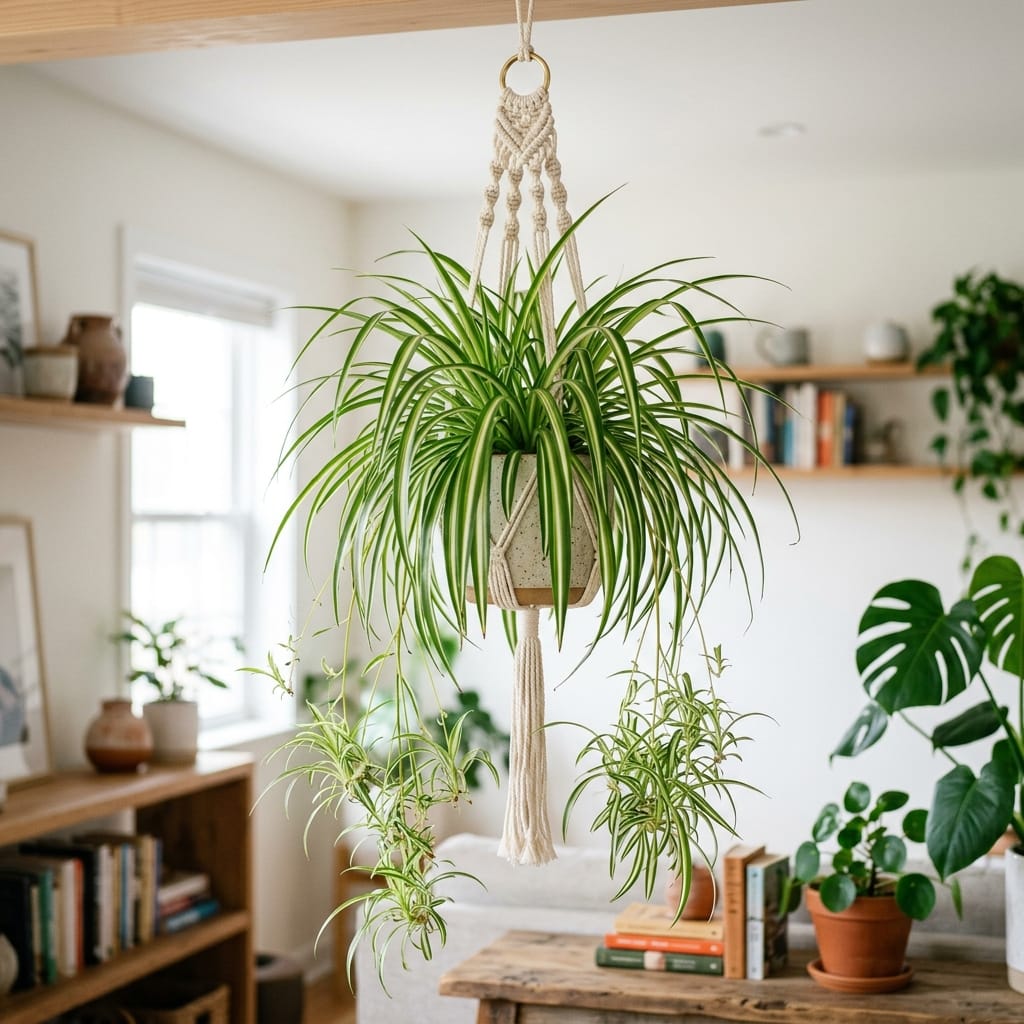
If I had to recommend one single houseplant to a complete beginner, it would be the spider plant (Chlorophytum comosum). These plants are nearly indestructible, propagate like crazy, purify the air, and are completely safe for pets. I’ve seen them survive months of neglect and bounce back like nothing happened.
My first-ever houseplant was a spider plant cutting from my grandmother’s kitchen. Twenty years later, I still have descendants of that original plant — that’s how easy they are to keep going.
Light Requirements
Spider plants are genuinely flexible with light:
| Light Level | What Happens |
|---|---|
| Low light | Survives but grows slowly, may lose variegation |
| Medium indirect | Healthy growth, good variegation |
| Bright indirect | Best growth, most babies, vibrant stripes |
| Direct sun | Can handle some morning sun; avoid harsh afternoon sun |
The sweet spot is bright indirect light. If your spider plant’s white stripes are fading to solid green, it needs more light. If leaves are getting scorched brown patches, it’s getting too much direct sun.
For rooms without natural light, consider a grow light.
Watering
Spider plants are drought-tolerant thanks to their thick, tuberous roots that store water. This makes them very forgiving:
- Water when the top inch of soil is dry
- In summer: roughly every 7-10 days
- In winter: every 2-3 weeks
- When in doubt, wait another day — underwatering is far less dangerous than overwatering
Important: Spider plants are sensitive to fluoride and chlorine in tap water. If you notice brown tips, try:
- Using filtered or distilled water
- Letting tap water sit out overnight before using
- Collecting rainwater (free and perfect)
If your plant is drooping and the soil is wet, you may be overwatering. See our overwatered plant rescue guide if you suspect root rot.
Humidity
Spider plants aren’t fussy about humidity, but they do appreciate it:
- Ideal: 40-60% relative humidity
- Minimum: They’ll tolerate average home humidity (30-40%)
- Signs of low humidity: Persistent brown tips even with filtered water
If brown tips are driving you crazy, try grouping plants together or using a humidifier.
Soil and Repotting
Spider plants aren’t picky about soil. Any well-draining standard potting mix works:
- Regular potting soil + perlite (80/20 mix)
- Must have drainage holes — spider plants hate sitting in water
When to repot:
- Roots poking out of drainage holes
- Plant is literally pushing itself out of the pot (their roots are incredibly strong)
- Soil dries out within a day of watering
Here’s the trick: spider plants produce more babies when slightly root-bound. So don’t rush to upsize. When you do repot, go up only one pot size (1-2 inches larger).
Propagating Spider Plant Babies
This is where spider plants really shine. Once your plant is mature and slightly root-bound, it’ll send out long stolons (runners) with baby plantlets dangling from the tips. These babies are free plants!
Method 1: Water Propagation
- Cut the baby off the runner with clean scissors
- Place in a jar of water, submerging just the base
- Change water every few days
- Wait for roots to reach 2-3 inches (1-2 weeks)
- Plant in soil
Method 2: Direct Soil Propagation
- Fill a small pot with moist potting mix
- Leave the baby attached to the mother plant
- Set the baby on the soil surface in the new pot
- Pin it down gently with a bobby pin or small stone
- Once rooted (2-3 weeks), cut the runner
Method 3: Division
For a bushy plant, you can divide the root ball when repotting. Gently separate the roots and plant each section in its own pot.
For more propagation tips, see our pothos propagation guide — the water rooting technique works the same way.
Fertilizing
Spider plants are light feeders:
- When: Spring and summer only
- Frequency: Every 4-6 weeks
- Type: Balanced liquid fertilizer at half strength
- Winter: No fertilizer needed
Over-fertilizing causes brown tips and salt buildup. If you see white crust on the soil, flush it by running water through the pot for a few minutes.
Common Problems
Brown Tips
The most common spider plant issue. The usual suspects:
| Cause | Solution |
|---|---|
| Fluoride in tap water | Use filtered/distilled water |
| Over-fertilizing | Reduce to half-strength, flush soil |
| Low humidity | Mist, humidifier, or pebble tray |
| Underwatering | Water more frequently |
You can snip brown tips off with scissors at an angle — it won’t hurt the plant.
Pale or Faded Leaves
If the white stripes are fading to solid green, your plant needs more light. Move it to a brighter spot.
No Babies
Your spider plant needs to be:
- Mature (at least 1 year old)
- Root-bound (don’t repot too often)
- Getting adequate light (at least medium indirect)
- Experiencing shorter days (fall/winter often triggers baby production)
Root Rot
Caused by overwatering or pots without drainage. Signs: mushy base, yellowing leaves, bad smell. See our root rot recovery guide.
Popular Varieties
| Variety | Look | Notes |
|---|---|---|
| ‘Vittatum’ | Green with white center stripe | Classic variety |
| ‘Variegatum’ | Green center, white edges | Reversed variegation |
| ‘Bonnie’ | Curly leaves, compact | Great for small spaces |
| ‘Solid Green’ | All green, no stripes | Most low-light tolerant |
| ‘Hawaiian’ | Champagne-colored with green stripes | Less common, striking |
Pet Safety
Spider plants are completely non-toxic to cats and dogs. They’re one of the best choices for pet owners. That said, cats are famous for being obsessed with spider plant leaves — the dangling fronds are basically irresistible cat toys. Hanging the plant is your best defense.
See more options in our pet-safe houseplants guide.
Where to Buy
🌿 Get a Spider Plant on AmazonFinal Thoughts
Spider plants earned their “unkillable” reputation honestly. They tolerate neglect, adapt to most light conditions, propagate effortlessly, purify your air, and won’t poison your pets. Whether you hang them in a macrame planter or set them on a shelf, they bring life to any space with minimal effort.
New to houseplants? Start here and check out our full list of the easiest indoor plants for beginners.