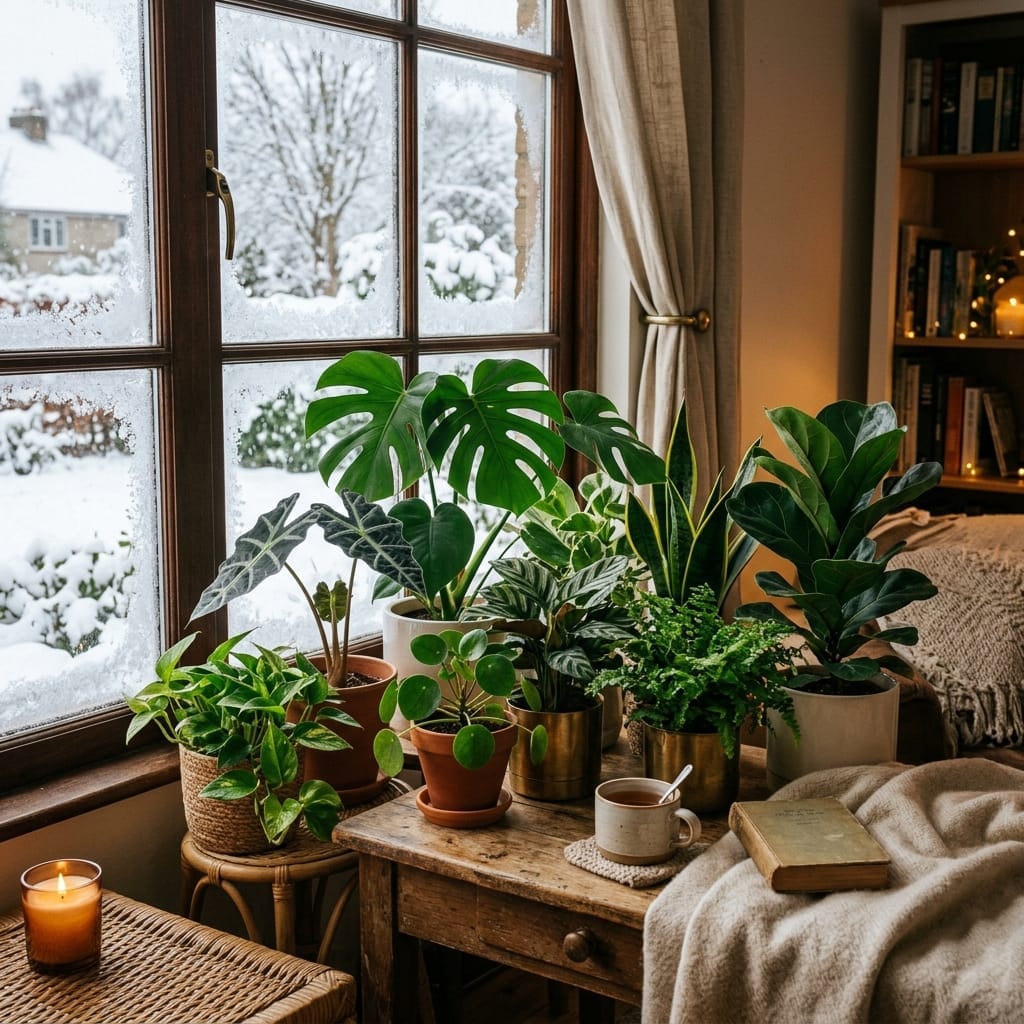
Every winter I get a wave of panicked messages: “My calathea is crispy!” “My pothos stopped growing!” “Everything is dying!” Winter is the hardest season for houseplants — and it catches people off guard because they’ve been doing everything right for months.
Here’s the thing: the plant care that works in July is totally wrong for January. Your home becomes a different environment in winter — drier, darker, and colder — and your plants need a different approach to match.
Here’s how to adjust.
The 5 Winter Plant Killers
1. Dry Air (Low Humidity)
The biggest winter villain. Heating systems blast dry air that drops indoor humidity to 20-30%. Tropical plants need 40-60%. The result: crispy leaf edges, brown tips, and unhappy plants everywhere.
Fix:
- Run a humidifier — the single most impactful winter investment
- Group plants together for a natural microclimate
- Use pebble trays under individual pots
- Move sensitive plants (calatheas, ferns) to the bathroom
For the full rundown, see do houseplants actually need humidity?
2. Overwatering
The #1 killer in every season, but worse in winter. Plants grow slowly or go dormant in winter, which means they use far less water. People keep watering on their summer schedule, soil stays soggy, and root rot sets in.
Fix:
- Reduce watering by 50-75%
- Always check soil before watering (finger test — dry 2 inches down)
- Snake plants and ZZ plants may only need water once a month in winter
3. Insufficient Light
Days are shorter and the sun is weaker. A spot that got bright indirect light in summer might barely get any in December. This causes leggy, stretched growth and yellow leaves.
Fix:
- Move plants closer to windows (just keep them off cold glass)
- Clean your windows — dirty glass blocks surprising amounts of light
- Consider a grow light for dark spaces
- Rotate plants regularly so all sides get light
4. Cold Drafts and Hot Spots
Plants stuck next to a cold window, exterior door, or heating vent get temperature-shocked:
- Cold drafts: Tropical plants are damaged below 55°F (13°C). Some drop leaves immediately.
- Heating vents: Blasts of hot, dry air directly on foliage cause rapid moisture loss.
Fix:
- Keep plants a few inches from windows — don’t let leaves touch cold glass
- Move plants away from exterior doors that get opened frequently
- Redirect heating vents away from plant areas
- Ideal temperature range: 60-75°F (15-24°C)
5. Pests Thrive
Ironically, winter is peak pest season indoors. Spider mites love dry air. Fungus gnats thrive in overwatered soil. And stressed plants are more vulnerable to infestations.
Fix:
- Inspect plants regularly (check undersides of leaves)
- Increase humidity (spider mites hate it)
- Don’t overwater (fungus gnats breed in wet soil)
- See our indoor plant pest guide for treatment
Plant-by-Plant Winter Adjustments
| Plant | Winter Water | Light Needs | Humidity Notes |
|---|---|---|---|
| Snake Plant | Every 4-6 weeks | Low-bright ok | Fine in dry air |
| ZZ Plant | Every 5-6 weeks | Low-bright ok | Fine in dry air |
| Pothos | Every 2-3 weeks | Move closer to window | Tolerates dry air |
| Monstera | Every 2-3 weeks | Needs bright spot | Appreciates humidifier |
| Calathea | Every 7-10 days | Medium indirect | NEEDS humidifier |
| Ferns | Keep moist | Medium indirect | NEEDS humidifier |
| Succulents | Every 3-4 weeks | Brightest spot possible | Fine in dry air |
Monthly Winter Checklist
November (Prep)
- Move plants away from cold windows (leave 2-3 inch gap)
- Set up your humidifier
- Reduce watering frequency
- Stop fertilizing
- Inspect all plants for pests
- Clean windows for maximum light
December-February (Maintenance)
- Check soil moisture before every watering
- Refill humidifier regularly
- Rotate plants quarterly
- Wipe dusty leaves monthly — dust blocks light
- Monitor for pests weekly
- Resist the urge to repot or propagate
March (Recovery)
- Gradually increase watering
- Resume fertilizing (half strength at first)
- Repot any root-bound plants
- Prune leggy winter growth
- Start propagation projects
Product Recommendations
1. LEVOIT Humidifier
The most impactful winter investment. Runs for days on a single fill.
💧 Get a Winter Humidifier2. Hygrometer
Monitor your actual humidity levels — you’ll be surprised how dry winter air is.
📊 Get a Hygrometer3. LED Grow Light
Supplement the weak winter sun. Essential for plants far from windows.
💡 Get a Grow LightFAQs
Why are my plants dying in winter? Less light, dry heated air, and overwatering. Reduce watering, add humidity, and maximize light exposure.
Should I water less? Yes — 50-75% less. Plants are semi-dormant and use far less water.
Do plants need fertilizer in winter? No. Resume in spring. Winter fertilizing causes salt buildup.
How do I increase humidity? A humidifier is most effective. Also try grouping plants, pebble trays, and bathroom placement.
Can cold windows kill my plants? Yes. Keep a few inches of gap and never let leaves touch freezing glass.
Happy growing! 🌿